

 App Store
 Google Play







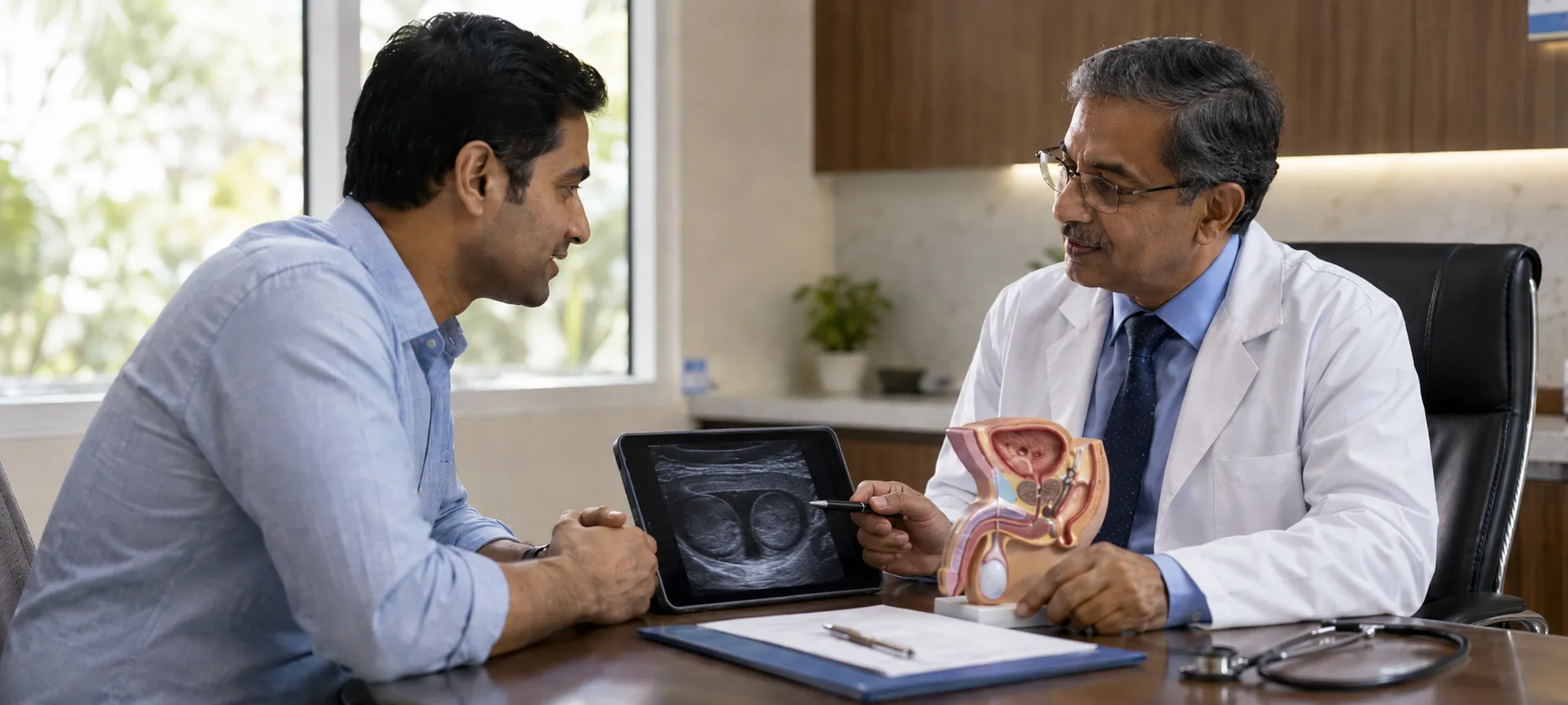
Orchiectomy is surgery to remove one or both testicles. It may be advised for testicular cancer, advanced prostate cancer, severe injury, testicular torsion, or gender-affirming care. Your testicles make sperm and testosterone, so this decision can affect fertility, hormones, sexual health, and emotions.
Most orchiectomy surgery is done under anaesthesia, so you do not feel pain during the operation. Your doctor will explain the reason, the type of procedure, the expected recovery, and the tests needed before and after treatment.
What Is Orchiectomy?
Orchiectomy is the surgical removal of one testicle or both testicles. Removal of one testicle is called unilateral orchiectomy. Removal of both testicles is called bilateral orchiectomy.
The removed tissue may be sent for histopathology. This is especially important when testicular cancer is suspected, because it helps confirm the diagnosis and guide further care.
Types Of Orchiectomy
The main types include:
- Simple orchiectomy: The testicle is removed through a small scrotal cut. It may be used for non-cancer reasons, hormone control, or gender-affirming care.
- Radical inguinal orchiectomy: The testicle and spermatic cord are removed through a groin cut. This is commonly used when testicular cancer is suspected.
- Subcapsular orchiectomy: The inner hormone-producing tissue is removed while part of the outer covering is left.
- Unilateral orchiectomy: Only one testicle is removed.
- Bilateral orchiectomy: Both testicles are removed, usually to lower testosterone or when both testicles are affected.
Why Is Orchiectomy Done?
Orchiectomy may be done to remove a suspected testicular tumour, reduce testosterone in advanced prostate cancer, remove a badly damaged testicle, or treat a testicle that cannot be saved after testicular torsion. It may also be part of gender-affirming care.
In testicular cancer, the procedure can be both diagnostic and therapeutic. In prostate cancer, bilateral removal lowers testosterone, which can slow hormone-sensitive cancer growth.
How Is Orchiectomy Performed?
Before orchiectomy surgery, your doctor reviews your medicines, allergies, medical history, and test results. You may be asked to avoid food and drink for a few hours before the operation.
During surgery, the area is cleaned and an incision is made in the scrotum or groin. The surgeon separates the testicle from nearby tissues and removes it. If cancer is suspected, the groin approach is usually preferred. The incision is closed with stitches and covered with a dressing.
Some people choose a testicular prosthesis for appearance. Your doctor can explain whether this is suitable for you.
Orchiectomy Vs Orchidectomy
Orchiectomy vs orchidectomy is mainly a difference in wording. Both terms mean surgical removal of one or both testicles. The first term is more common in American usage, while the second is often used in UK and Commonwealth medical writing.
If you see orchiectomy vs orchidectomy in your report, ask your doctor which type has been planned, such as simple, radical inguinal, unilateral, or bilateral.
Risks And Complications Of Orchiectomy
Orchiectomy is generally safe when done by a trained surgical team, but risks can include pain, swelling, bruising, bleeding, infection, wound healing problems, and anaesthesia-related reactions.
If both testicles are removed, testosterone levels fall sharply. This may cause hot flushes, fatigue, low sexual desire, erectile dysfunction, infertility, bone thinning, mood changes, and depression. Long-term follow-up may also include checks for metabolic syndrome, diabetes risk, weight gain, and hypertension.
Erectile dysfunction after surgery depends on hormone levels, age, medicines, cancer treatment, and emotional health. Depression can also affect recovery, body image, and sexual wellbeing. Support is available, so share these concerns with your doctor early.
Recovery After Orchiectomy
Recovery is usually steady when you follow aftercare instructions.
- Rest For The First Few Days
Avoid heavy work, running, cycling, and lifting. Gentle walking is usually allowed. - Keep The Wound Clean And Dry
Follow dressing, bathing, and wound care instructions. - Manage Pain And Swelling
Take medicines as advised. Supportive underwear or cold packs may help if approved by your doctor. - Avoid Strain
Do not resume sex, gym activity, or strenuous exercise until your doctor confirms that healing is adequate. - Attend Follow-Up Visits
Follow-up helps review wound healing, pathology results, hormone health, fertility concerns, and further treatment needs.
Orchiectomy Procedure: What To Expect
On the day of the procedure, your team confirms your identity, consent, anaesthesia plan, and test results. After surgery, you are monitored until you are awake and stable. Many people go home the same day.
Mild pain, swelling, or bruising can happen for a few days. Contact your doctor if you develop fever, severe pain, increasing redness, pus, heavy bleeding, trouble passing urine, or sudden swelling.
What Tests Should Be Done Before Orchiectomy Surgery?
Tests may include:
- Physical examination of the testicles, abdomen, and lymph nodes
- Scrotal ultrasound to assess a lump, swelling, or blood flow
- Complete blood count, kidney function, liver function, blood sugar, and clotting profile
- Tumour markers such as AFP, beta-hCG, and LDH when testicular cancer is suspected
- PSA and related tests when prostate cancer treatment is planned
- ECG or cardiac review if you have heart disease, hypertension, diabetes, or metabolic syndrome
- CT scan or MRI when cancer staging is needed
- Fertility counselling and sperm banking discussion where relevant
Metropolis Healthcare offers blood tests, speciality tests, and full body checkups that can support pre-surgery assessment and overall health monitoring.
Post-Surgery Tests: Monitoring After Orchiectomy
After treatment, your doctor may advise:
- Histopathology of the removed testicle
- Repeat AFP, beta-hCG, and LDH in testicular cancer follow-up
- Testosterone testing if both testicles are removed or symptoms suggest low levels
- PSA monitoring in advanced prostate cancer
- Blood sugar, cholesterol, liver function, kidney function, and blood pressure checks
- Bone health assessment when long-term low testosterone is expected
- Imaging tests when surveillance or staging requires it
- Mental health review if depression, anxiety, or distress continue
These checks help monitor recovery, cancer response, hormone health, metabolic syndrome, hypertension, erectile dysfunction, and emotional wellbeing.
Conclusion
Orchiectomy can help treat testicular cancer, manage advanced prostate cancer, address severe testicular torsion, or support specific hormone-related care. It is natural to have questions about fertility, hormones, sexual health, and recovery. A clear discussion with your doctor can help you make informed decisions.
Metropolis Healthcare can support preventive healthcare and treatment monitoring with 4,000 plus tests, full body checkups, speciality testing, accurate reports, quick turnaround time, home sample collection, and easy booking through website, call, app, and WhatsApp.
FAQ
Is Orchiectomy Safe?
Yes. It is generally safe when performed by an experienced surgical team. Your doctor will assess your health before surgery to reduce risks such as bleeding, infection, pain, and anaesthesia-related complications.
What Is The Recovery Time For Orchiectomy?
Many people return to light activity within one to two weeks. Full recovery may take a few weeks. Avoid heavy lifting, cycling, gym activity, and sex until your doctor says it is safe.
Does Orchiectomy Affect Fertility?
Unilateral surgery may not affect fertility if the remaining testicle is healthy. Bilateral removal causes infertility because sperm production stops. Ask about sperm banking before treatment if future parenthood matters to you.
Can Orchiectomy Be Reversed?
No. The removed testicle cannot be restored. A testicular prosthesis can help with appearance, and hormone therapy may be considered after bilateral surgery when medically suitable.
References
- Stephenson A, Eggener SE, Bass EB, Chelnick DM, Daneshmand S, Feldman D, et al. Diagnosis and treatment of early stage testicular cancer: AUA guideline. J Urol. 2019;202(2):272-28 PMID: 31059687.
- Laguna MP, Albers P, Algaba F, Bokemeyer C, Boormans JL, Fischer S, et al. EAU guidelines on testicular cancer. European Association of Urology. 2025.
- Virgo KS, Rumble RB, de Wit R, Mendelson DS, Smith TJ, Taplin ME, et al. Initial management of noncastrate advanced, recurrent, or metastatic prostate cancer: ASCO guideline update. J Clin Oncol. 2021;39(11):1274-1305. PMID: 33497248.
- Weiner AB, Nettey OS, Morgans AK, Abern MR, Ryan CJ, Daskivich TJ, et al. Surgical versus medical castration for metastatic prostate cancer: use and overall survival in a national cohort. J Urol. 2020;203(5):933-939. PMID: 31910086.
- Milose JC, Filson CP, Weizer AZ, Hafez KS, Montgomery JS. Role of biochemical markers in testicular cancer: diagnosis, staging, and surveillance. Open Access J Urol. 2011;4:1-8. PMID: 24198649.