

 App Store
 Google Play




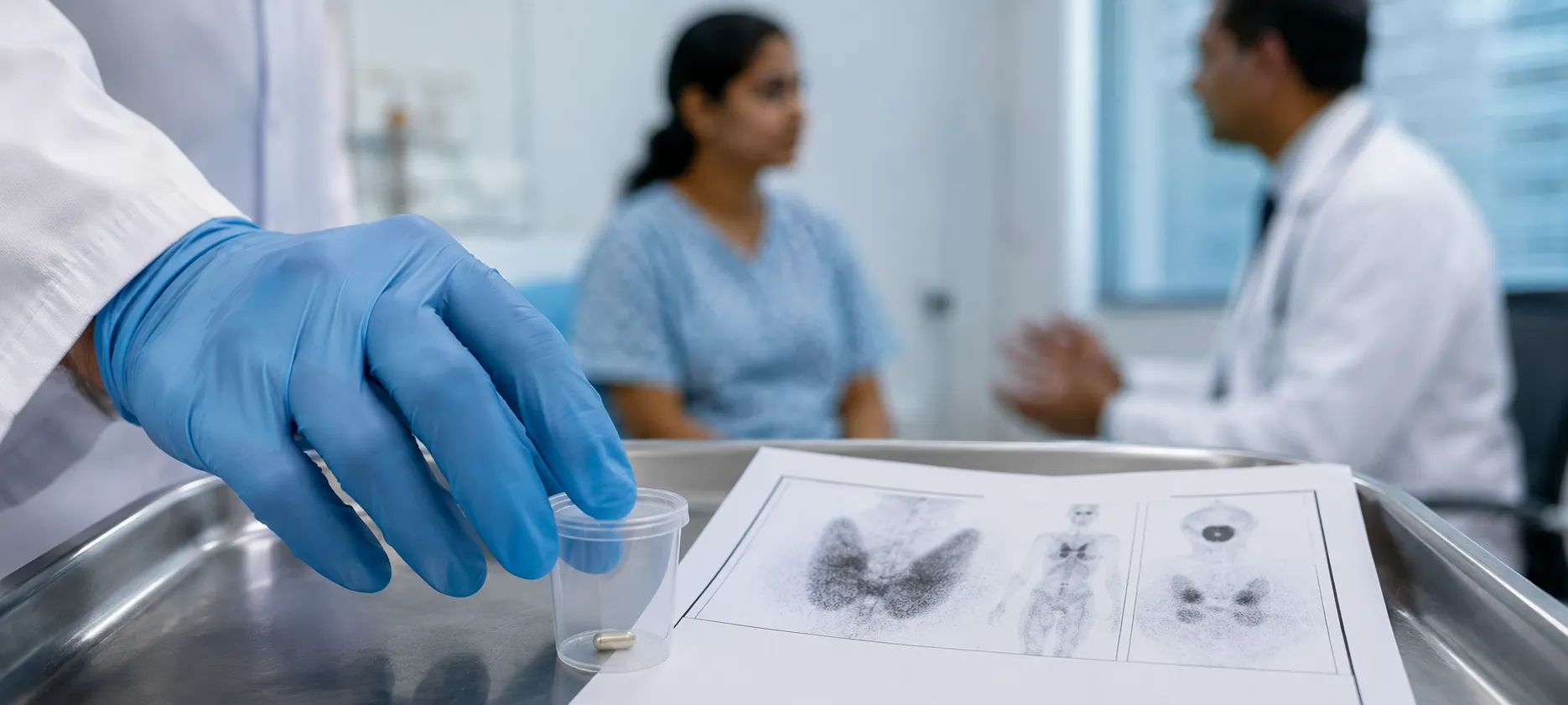
Radioactive iodine therapy is a targeted treatment used for some thyroid conditions, especially certain types of thyroid cancer. It is given in planned medical doses under specialist care.
For thyroid cancer, radioactive iodine therapy is usually considered after thyroid surgery. It helps destroy remaining thyroid cells or thyroid cancer cells that can absorb iodine. This can support long-term monitoring.
What Is Radioactive Iodine Therapy?
What is radioactive iodine therapy? It is a nuclear medicine treatment that uses a radioactive form of iodine, most often iodine-131. Thyroid cells naturally absorb iodine to make thyroid hormones. This treatment uses that ability to deliver radiation mainly to thyroid cells, with limited exposure to many other tissues.
In thyroid cancer care, radioactive iodine therapy is mainly used for differentiated thyroid cancers. These include papillary thyroid cancer and follicular thyroid cancer. It is not usually effective for medullary or anaplastic thyroid cancer because they do not absorb iodine well.
How Does Radioactive Iodine Therapy Work?
After you swallow radioactive iodine as a capsule or liquid, it enters your bloodstream. Thyroid cells and iodine-absorbing cancer cells take it up. The radiation then works inside those cells and damages them.
This is why radioactive iodine therapy can be useful after thyroidectomy. Tiny amounts of thyroid tissue can remain after surgery. RAI may help remove this tissue and make future thyroglobulin monitoring more accurate.
Your doctor may raise your thyroid-stimulating hormone level before treatment. This may be done by stopping thyroid hormone medicine briefly or by giving synthetic hormone injections. A higher level helps thyroid cells absorb more iodine.
Benefits Of Radioactive Iodine Therapy
Radioactive iodine therapy can offer several benefits when it is advised for the right person.
- It targets thyroid cells because these cells naturally absorb iodine.
- It can destroy leftover thyroid tissue after thyroid surgery.
- It can help reduce the risk of thyroid cancer coming back in selected cases.
- It may treat iodine-absorbing cancer cells that have spread to lymph nodes or other sites.
- It can make thyroglobulin testing more useful.
- It is also used for some cases of hyperthyroidism.
Side Effects Of Radioactive Iodine Therapy
Radioactive iodine therapy side effects are often temporary, but you should know what to expect. Possible radioactive iodine therapy side effects include:
- Nausea or vomiting
- Neck pain, tenderness, or swelling
- Dry mouth
- Salivary gland swelling or soreness
- Taste changes or metallic taste
- Dry eyes
- Tiredness
- Mild stomach irritation
Rare long-term concerns may include salivary gland problems, fertility concerns, and a small increase in the risk of a second cancer after higher doses.
Cost Of Radioactive Iodine Therapy
Radioactive iodine therapy cost can vary based on the city, hospital, dose, room requirement, scans, blood tests, specialist fees, and isolation needs. Radioactive iodine therapy cost may also differ if the treatment is used after thyroid cancer surgery compared with hyperthyroidism.
Ask your treating centre for a written estimate of radioactive iodine therapy cost before treatment planning.
Who Can Benefit From Radioactive Iodine Therapy?
Radioactive iodine therapy may benefit selected people after a clear medical assessment. Your doctor may consider it if:
- You have papillary thyroid cancer with features that increase recurrence risk.
- You have follicular thyroid cancer that can absorb iodine.
- There is thyroid tissue left after thyroidectomy.
- Thyroid cancer has spread to lymph nodes or distant sites and is iodine-avid.
- Your thyroglobulin levels suggest possible remaining thyroid tissue or disease.
- You have hyperthyroidism and RAI is suitable for you.
It is not suitable for everyone. It is not given during pregnancy or breastfeeding. It may also be avoided or delayed with severe uncontrolled thyroid hormone levels, active vomiting, diarrhoea, or specific eye problems related to Graves disease.
Radioactive Iodine Therapy Procedure
The radioactive iodine therapy procedure is usually short, but preparation and aftercare need planning. Your specialist will decide the dose based on your diagnosis, surgery details, scans, blood tests, and risk category.
You may receive the dose as a capsule or liquid. Depending on the dose, you may go home the same day or stay in a special hospital room.
What Happens During An RAI Session?
A typical session may include these steps:
- Final assessment: Your team checks your reports, pregnancy status when applicable, medicines, and recent test results.
- Safety instructions: You receive guidance on distancing, hygiene, fluids, and toilet use.
- Treatment dose: You swallow the radioactive iodine capsule or liquid with water.
- Observation: You may be monitored for a short period after the dose.
- Discharge or isolation: You either go home with safety instructions or stay in hospital until radiation levels reduce.
- Follow-up scan: A whole-body scan may be done later to see where the iodine has collected.
Preparing For RAI
Preparation helps treatment work better and keeps you safe. Your doctor may advise you to:
- Follow a low-iodine diet for one to two weeks before treatment.
- Avoid iodised salt, seafood, seaweed, dairy products, egg yolks, soy products, and some processed foods if advised.
- Stop thyroid hormone medicine or certain anti-thyroid medicines if advised.
- Inform your doctor about all medicines, supplements, and allergies.
- Take a pregnancy test if there is any chance of pregnancy.
- Stop breastfeeding well before treatment if applicable.
- Arrange a separate sleeping space for the isolation period.
Aftercare And Follow-Up After RAI
After treatment, your body removes most of the iodine through urine, saliva, sweat, and stool. You may need to drink enough water, use a separate toilet if possible, flush carefully, wash your hands often, and avoid sharing personal items for the advised period.
You may need to keep distance from other people for a few days. Take extra care around babies, children, and pregnant women. Avoid close contact, public transport, and preparing food for others until your doctor says it is safe.
Follow-up may include thyroid hormone adjustment, thyroglobulin testing, anti-thyroglobulin antibody testing, ultrasound, or whole-body scanning when needed. Follow your doctor's exact advice on pregnancy and conception planning.
What Tests To Do Before And After RAI
Before treatment, your doctor may advise thyroid function tests, thyroid-stimulating hormone levels, thyroglobulin, anti-thyroglobulin antibodies, kidney function tests, pregnancy testing, neck ultrasound, and a diagnostic scan in selected cases.
After treatment, tests may include thyroid function tests to adjust levothyroxine, thyroglobulin and anti-thyroglobulin antibody tests, neck ultrasound, and whole-body scan if required.
Types Of Thyroid Cancer Treated With Radioactive Iodine
RAI is mainly used for differentiated thyroid cancer types that absorb iodine.
- Papillary thyroid cancer: This common type often responds well when iodine treatment is appropriate.
- Follicular thyroid cancer: This type can absorb iodine and may be treated in selected cases.
- Hurthle cell thyroid cancer: Some cases may absorb iodine, but response can vary.
- Medullary thyroid cancer: This usually does not absorb iodine well.
- Anaplastic thyroid cancer: This usually does not respond to iodine therapy.
Risks And Complications Of RAI
RAI is generally well tolerated, but it needs strict medical supervision. Short-term issues may include nausea, dry mouth, taste changes, neck tenderness, and tiredness.
Long-term risks depend on the dose, age, fertility plans, and previous treatments. Some people may need lifelong thyroid hormone replacement. Salivary gland dryness, dental issues, fertility effects, or rare second cancers may occur after higher cumulative doses.
FAQ
What Is The Success Rate Of RAI?
The success rate depends on why it is being used. For selected differentiated thyroid cancers, it can help destroy remaining thyroid tissue after surgery. For hyperthyroidism, many people respond well after one dose, but some may need another dose or lifelong thyroid hormone medicine.
How Long Does It Take For RAI To Work?
The effect is not always immediate. In thyroid cancer, treated cells are damaged over time, and follow-up tests help show response. In hyperthyroidism, hormone levels may improve over weeks to months. Your doctor will plan repeat blood tests and scans.
Are There Any Long-Term Risks Of RAI?
Yes, but they do not affect everyone. Possible long-term risks include dry mouth, salivary gland problems, fertility effects, and a small increase in second cancer risk with higher doses. Your doctor will explain your personal risk.
How Do I Know If RAI Is Right For Me?
You need a specialist assessment. Your doctor will review your cancer type, surgery report, tumour size, lymph node status, spread, thyroglobulin level, scan results, age, pregnancy plans, and overall health. The treatment is not needed for every thyroid cancer case.
Can I Continue Normal Activities After RAI?
You may need to limit normal activities for a few days. This includes work, travel, close contact, cooking for others, and sharing personal items. The restriction period depends on your dose and local radiation safety advice.
Conclusion
RAI is an important treatment for selected people with thyroid cancer. With the right preparation, safety steps, testing, and follow-up, it can support treatment and long-term monitoring.
Metropolis Healthcare can support your thyroid cancer care journey with reliable blood tests, speciality testing, thyroid profiles, full body checkups, accurate reports, and convenient home sample collection. With NABL and CAP-accredited labs, advanced technology, expert pathologists, 4,000+ tests, quick turnaround time, easy booking through website, app, call, and WhatsApp, and a strong home collection network with 10,000 touchpoints, Metropolis Healthcare helps you stay informed about your health before, during, and after treatment.
References
- National Cancer Institute. Thyroid Cancer Treatment, Adult, PDQ Health Professional Version.
- American Cancer Society. Radioactive Iodine Therapy For Thyroid Cancer.
- Cleveland Clinic. Radioactive Iodine Therapy: Benefits, Side Effects, And Procedure.
- Haugen BR, Alexander EK, Bible KC, Doherty GM, Mandel SJ, Nikiforov YE, et al. 2015 American Thyroid Association Management Guidelines For Adult Patients With Thyroid Nodules And Differentiated Thyroid Cancer. Thyroid. 2016;26(1):1-133. PMID: 26462967.
- Ross DS, Burch HB, Cooper DS, Greenlee MC, Laurberg P, Maia AL, et al. 2016 American Thyroid Association Guidelines For Diagnosis And Management Of Hyperthyroidism And Other Causes Of Thyrotoxicosis. Thyroid. 2016;26(10):1343-1421. PMID: 27521067.