

 App Store
 Google Play







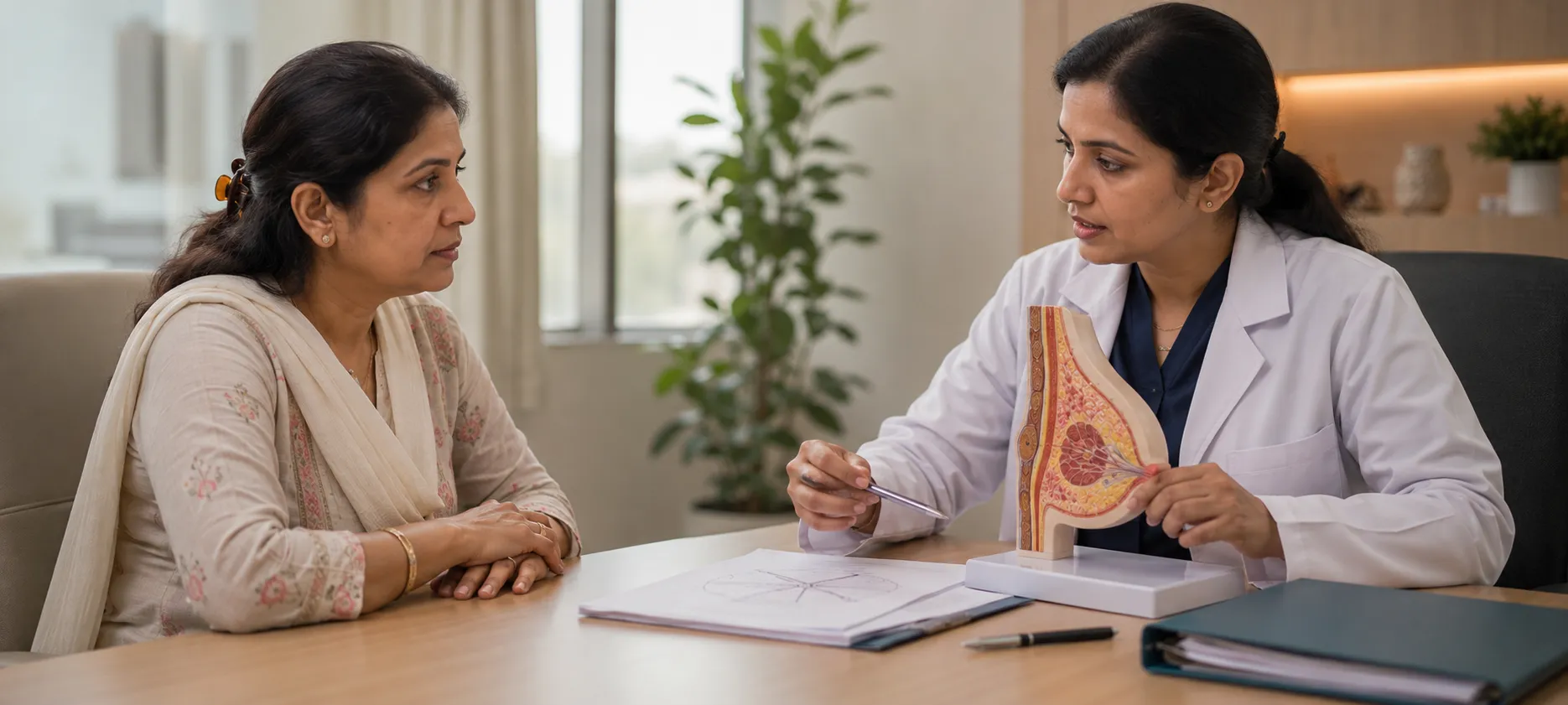
A modified radical mastectomy is a breast cancer surgery that removes the whole breast and many underarm nodes while keeping the main chest muscles intact. Knowing what happens before, during, and after surgery can help you feel prepared.
What Is Modified Radical Mastectomy?
Modified radical mastectomy is usually advised when breast cancer has spread across the breast or has involved the axillary lymph nodes. It may remove breast tissue, nipple, areola, some skin, and selected underarm nodes.
The removed tissue is tested in a laboratory. Results help your doctor understand tumour type, margins, receptor status, and whether cancer cells have reached the nodes. This guides chemotherapy, radiation therapy, hormone therapy, targeted therapy, or follow-up.
Types Of Modified Radical Mastectomy
Modified radical mastectomy types depend on your cancer stage, skin involvement, breast size, and reconstruction plan. These modified radical mastectomy types are selected after careful medical review.
- Standard MRM: The full breast and axillary lymph nodes are removed, while chest muscles are preserved.
- Skin-sparing MRM: Most breast skin is kept when immediate reconstruction is suitable.
- Nipple-sparing MRM: The nipple and areola may be kept in carefully selected cases.
- MRM with reconstruction: Breast reconstruction may happen during the same surgery or later.
Steps In Modified Radical Mastectomy Procedure
These modified radical mastectomy steps may vary, but the usual modified radical mastectomy procedure follows a planned order. Your surgeon may adapt the modified radical mastectomy steps to your medical needs.
- Pre-surgery review: Reports, medicines, allergies, and fitness for general anaesthesia are checked.
- Anaesthesia: You receive general anaesthesia so you remain asleep and pain-free.
- Incision: The surgeon makes an incision over the planned breast area.
- Tissue removal: The breast tissue is removed as per the surgical plan.
- Node removal: Axillary lymph nodes are removed to check and manage local spread.
- Drain placement: One or more drains may be placed to remove extra fluid.
- Closure: The incision is closed and covered with a dressing.
- Recovery monitoring: Pain, wound, drain output, and recovery from anaesthesia are checked.
What To Expect During Recovery
Recovery is gradual. You may feel pain, tightness, tiredness, numbness, or swelling around the chest and underarm. Drains may stay for one to three weeks. Many people return to light activities in a few weeks.
Your doctor may suggest arm and shoulder exercises. Avoid heavy lifting, sudden arm strain, or driving until your surgeon says it is safe. Call your care team for fever, worsening pain, redness, wound discharge, sudden swelling, or breathlessness.
What Tests Should You Do Before And After Surgery?
Tests help your care team plan surgery safely and decide further treatment.
Before surgery, your doctor may advise:
- Mammogram, ultrasound, or MRI
- Core needle biopsy or tissue biopsy
- Complete blood count
- Blood sugar, kidney function, and liver function tests
- Blood grouping and coagulation profile
- ECG or chest imaging if needed
- ER, PR, and HER2 testing on biopsy samples
After surgery, your doctor may advise:
- Histopathology of removed breast tissue
- Testing of removed nodes
- Receptor or molecular tests if needed
- Blood tests before chemotherapy, radiation, or other therapies
- Follow-up imaging when clinically required
- Routine health checkups for recovery and wellness monitoring
Benefits And Risks Of Modified Radical Mastectomy
Possible benefits include:
- Removes the affected breast tissue
- Helps treat breast cancer with underarm node involvement
- Allows detailed testing of removed nodes
- Preserves the main chest muscles
- Helps plan further treatment
Possible risks include:
- Pain, bleeding, infection, or delayed wound healing
- Fluid collection called seroma
- Arm swelling due to lymph fluid build-up
- Shoulder stiffness or reduced arm movement
- Numbness, tingling, or nerve discomfort
- Emotional distress or body image concerns
- Risks related to general anaesthesia
Modified Radical Mastectomy Vs. Traditional Mastectomy
A simple mastectomy removes the whole breast but usually does not remove many underarm nodes. A modified radical mastectomy removes the breast and selected underarm nodes. A radical mastectomy, which is rarely used today, removes the breast, nodes, and chest muscles. The main advantage of modified radical mastectomy is that it treats selected breast cancer cases while preserving chest muscles.
What To Expect In The Long-Term After The Surgery
After modified radical mastectomy, you may need follow-up visits, physiotherapy, medicines, radiation, chemotherapy, or hormone therapy. Tightness, numbness, or altered sensation can continue for months as nerves heal. Lymphedema can also appear later, so report persistent arm swelling, heaviness, or reduced movement early.
Your doctor can guide you on reconstruction, external prosthesis, scar care, and screening of the other breast.
Emotional And Psychological Support After Surgery
It is normal to feel anxious, sad, relieved, angry, or unsure after modified radical mastectomy. Speak with your doctor, counsellor, family, or a support group. Support can help you adjust to recovery, body image changes, and daily life after surgery.
Conclusion
Modified radical mastectomy can be an important part of breast cancer treatment when cancer involves the breast and nearby nodes. Timely diagnosis, personalised treatment, good surgical care, and regular monitoring support better recovery.
Metropolis Healthcare supports your health journey with NABL and CAP-accredited labs, advanced technology, expert pathologists, speciality testing, 4,000+ tests, full body checkups, reliable reports, and home sample collection through a strong network of 10,000 touchpoints. You can book tests through the website, app, call, or WhatsApp, helping you stay informed before treatment, during recovery, and as part of long-term wellness monitoring.
FAQ
Is Modified Radical Mastectomy Safe?
This surgery is generally safe when performed by an experienced surgical team in the right clinical setting. Like any major surgery, it has risks. Your doctor will assess your cancer stage, health, medicines, and surgical fitness before recommending it.
How Long Does It Take To Recover From A Modified Radical Mastectomy?
Many people need four to six weeks for basic recovery. Numbness, tightness, or reduced shoulder movement may take longer to improve. Follow your surgeon's advice and do the recommended exercises.
What Are The Risks Of Modified Radical Mastectomy?
The risks include pain, infection, bleeding, fluid collection, wound problems, shoulder stiffness, altered sensation, lymphedema, and anaesthesia-related complications. Emotional effects can also occur, so support is important.
How Much Does A Modified Radical Mastectomy Cost?
The cost varies by city, hospital, surgeon fees, room type, investigations, medicines, reconstruction, and insurance coverage. Your treating hospital can give the most accurate estimate after reviewing your case.
What Are The Different Types Of Mastectomy Procedures?
Common types include:
- Simple or total mastectomy
- Modified radical mastectomy
- Radical mastectomy
- Skin-sparing mastectomy
- Nipple-sparing mastectomy
- Double mastectomy
Can Modified Radical Mastectomy Cause Lymphedema?
Yes. This surgery can cause lymphedema because node removal may affect lymph fluid drainage. This can lead to arm swelling, heaviness, tightness, or discomfort. Early reporting and physiotherapy can help manage symptoms.
What To Do If You Experience Complications Post-Surgery?
Contact your healthcare team promptly if you notice:
- Fever
- Increasing pain
- Redness, warmth, or discharge from the wound
- Sudden swelling in the arm or chest
- Bleeding
- Shortness of breath
- Reduced arm movement that is getting worse
- Anxiety, low mood, or emotional distress that feels difficult to manage
References
- National Cancer Institute. NCI Dictionary Of Cancer Terms: MRM.
- American Cancer Society. Mastectomy: What Is A Mastectomy?
- Cleveland Clinic. Modified Radical Mastectomy: What It Is And Procedure Steps.
- Czajka ML, Pfeifer C. Breast Cancer Surgery. StatPearls. Treasure Island: StatPearls Publishing; 2023. PMID: 31971725.
- Gillespie TC, Sayegh HE, Brunelle CL, Daniell KM, Taghian AG. Breast Cancer-Related Lymphedema: Risk Factors, Precautionary Measures, And Treatments. Gland Surg. 2018;7(4):379-403. PMID: 30288124.