

 App Store
 Google Play







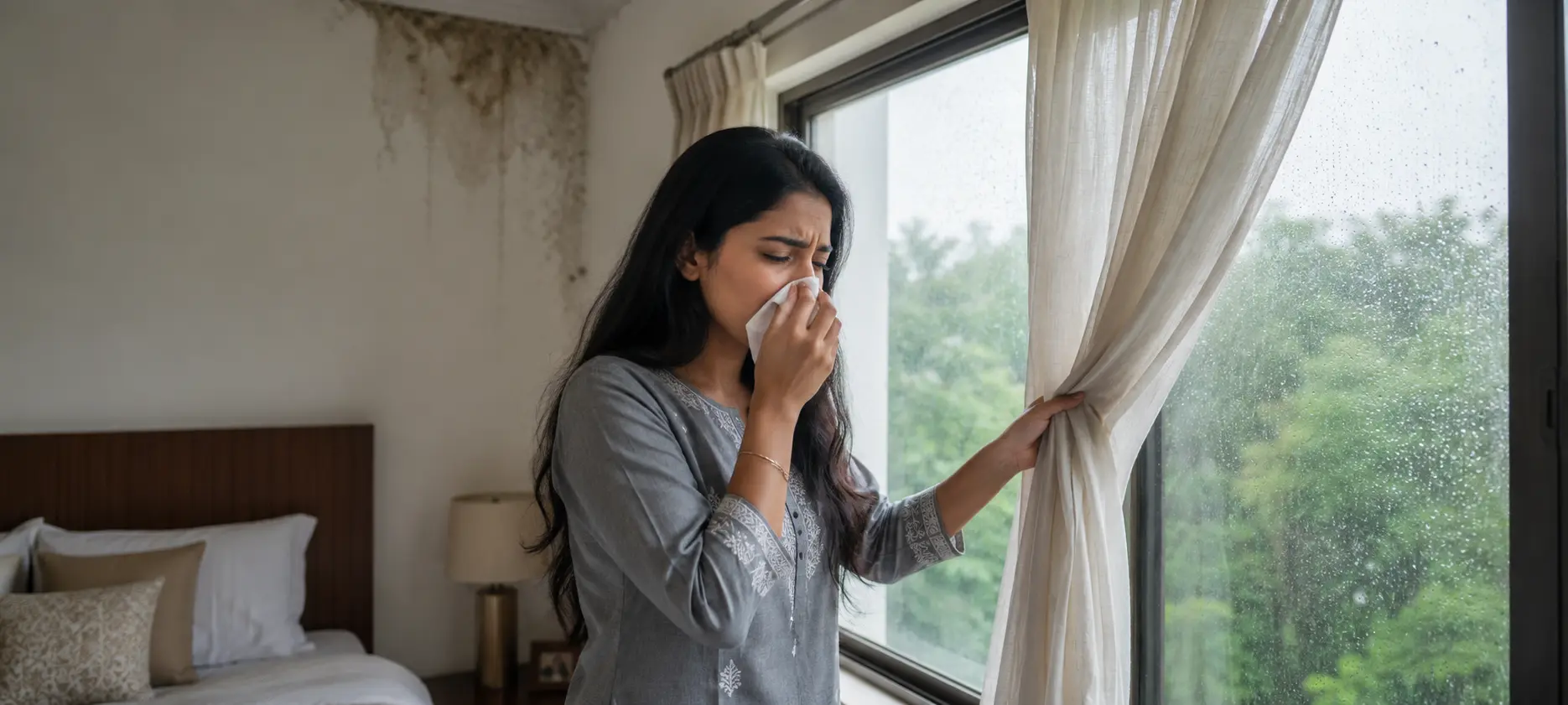
The monsoon offers relief from the summer heat, but increased humidity and dampness can make allergy symptoms more noticeable.
You may experience frequent sneezing, an itchy nose, watery eyes, skin irritation or breathing discomfort. These symptoms are often called monsoon allergies or rainy season allergies. However, the monsoon itself is not an allergen.
Moisture encourages mould and dust mites to grow indoors. Closed windows and poor ventilation can also allow allergens to collect inside your home. Identifying your triggers can help you manage symptoms and enjoy the rainy season more comfortably.
What Are Monsoon Allergies?
Monsoon allergies are allergic reactions that appear or worsen during the rainy season.
An allergy develops when your immune system reacts strongly to a substance that is usually harmless. This substance is called an allergen. During the monsoon, common allergens include mould spores, dust mites, pollen and animal dander.
Allergies during monsoon may affect your:
- Nose and sinuses
- Eyes
- Skin
- Airways
Monsoon allergies are not contagious. You cannot catch them from another person.
Why Do Allergies Increase During The Monsoon Season?
Humidity and persistent dampness create favourable conditions for several indoor allergens.
Mould can grow on wet walls, ceilings, cupboards, carpets, books and furniture. Dust mites also thrive in warm, humid places such as mattresses, pillows, curtains and upholstered furniture.
People may keep doors and windows closed during heavy rain. This can reduce ventilation and trap allergens indoors. Water leaks, damp clothes and poorly maintained air conditioners may add to the problem.
Changes in temperature and humidity may also irritate your nose even when you do not have a true allergy. This is known as non-allergic rhinitis.
Common Causes Of Monsoon Allergies
Mould Spores
Mould grows where moisture remains for long periods. Its spores can enter the air and trigger allergic rhinitis, eye irritation, cough or asthma symptoms.
Mould allergy symptoms may worsen in damp rooms or buildings with visible mould, musty smells, leaks or water damage.
Dust Mites
Dust mites are microscopic organisms commonly found in bedding, mattresses, carpets and soft furnishings.
They prefer warm and humid conditions. Their waste particles can trigger sneezing, nasal congestion, itchy eyes, eczema and asthma symptoms.
Pollen
Some plants release pollen during or around the rainy season. Wind and changing weather conditions may carry pollen through the air.
Pollen can enter your home through doors, windows, clothes, shoes and pets.
Animal Dander
Dander consists of tiny flakes of skin shed by animals. Proteins found in animal saliva and urine may also trigger allergies.
Pets can carry pollen, mud and mould spores indoors on their fur during the monsoon.
Damp Clothing And Footwear
Wet clothing does not usually cause an allergy by itself. However, prolonged dampness may irritate your skin and allow fungal infections to develop.
A fungal skin infection is not the same as an allergy. Since both can cause redness and itching, you may need a medical assessment to identify the correct cause.
Indoor Irritants
Smoke, incense, mosquito coils, perfumes, cleaning products and air pollution can irritate your nose, eyes and airways.
These substances may worsen existing allergy or asthma symptoms even when they do not cause a true allergic reaction.
Symptoms Of Monsoon Allergies
Monsoon allergy symptoms vary according to the allergen and the affected part of your body.
Nasal And Sinus Symptoms
- Repeated sneezing
- An itchy nose
- A runny or blocked nose
- Post-nasal drip
- Sinus pressure
- Reduced sense of smell
- An itchy throat or roof of the mouth
Eye Symptoms
- Redness
- Watering
- Itching
- Puffy eyelids
- A gritty or burning sensation
Respiratory Symptoms
- Dry cough
- Wheezing
- Chest tightness
- Shortness of breath
- Night-time coughing
- Worsening asthma symptoms
Skin Symptoms
- Itching
- Hives
- Dry or inflamed skin
- Eczema flare-ups
- Redness after contact with a substance
- Swelling in the affected area
Skin allergies in monsoon should not automatically be treated as fungal infections. Avoid applying steroid, antifungal or combination creams without proper medical guidance.
How Can You Tell An Allergy From A Cold?
Allergies and viral colds can cause similar symptoms, but certain differences may help.
Allergies commonly cause itching of the eyes, nose or throat. Symptoms may begin soon after exposure to a trigger and continue for weeks if the exposure persists. Allergies do not usually cause fever or significant body aches.
A cold is caused by a virus. It may cause a sore throat, tiredness, mild fever or body ache. Most uncomplicated colds improve within several days.
You can also have an allergy and a respiratory infection at the same time. Consult a doctor if the cause is unclear or your symptoms are persistent.
Who Is More Prone To Seasonal Allergies?
You may have a higher risk of rainy season allergies if you:
- Have allergic rhinitis, asthma or eczema
- Have a family history of allergies
- Live or work in a damp building
- Have visible mould or water leakage at home
- Spend considerable time around dust, animals or stored materials
- Have frequent exposure to smoke or pollution
- Work in environments with flour, wood dust, chemicals or biological material
- Are a child with sensitive airways
- Have poorly controlled asthma
People with chronic lung disease or reduced immunity should seek medical advice about significant mould exposure because their health risks may differ.
Tips To Prevent Monsoon Allergies At Home
Control Indoor Humidity
Try to maintain indoor relative humidity between 30 and 50 per cent where practical.
A hygrometer can help you measure humidity. Use a dehumidifier or air conditioner when needed, and clean the appliance according to the manufacturer's instructions.
Repair Leaks Promptly
Check roofs, walls, windows, sinks and pipes for leakage.
Dry wet areas and materials within 24 to 48 hours where possible. Persistent dampness allows mould to return even after surface cleaning.
Improve Ventilation
Use kitchen and bathroom exhaust fans that release air outdoors.
Open windows when it is not raining and outdoor humidity or pollution is not excessive. Avoid blocking air vents with furniture or curtains.
Reduce Dust Mites
Wash bed linen regularly in hot water when the fabric allows. Dry it completely before use.
Consider allergen-resistant covers for mattresses and pillows. Reduce unnecessary carpets, stuffed toys and heavy curtains if they repeatedly collect dust.
Clean Carefully
Use a damp cloth instead of dry dusting, which can send allergens into the air.
A vacuum cleaner with a high-efficiency particulate air filter may help reduce dust. If cleaning triggers your symptoms, wear a suitable mask or ask another person to clean.
Manage Mould Safely
Small areas of mould on hard surfaces may be cleaned with detergent and water, followed by complete drying.
Large, recurring or hidden mould growth may require professional assessment. Do not mix bleach with ammonia, acids or other cleaning products because this can release dangerous fumes.
Keep Clothes And Footwear Dry
Change out of wet clothes as soon as possible.
Dry shoes, socks, towels and rainwear completely before using them again. Choose loose, breathable clothing if your skin becomes irritated easily.
Reduce Allergens From Pets
Wipe your pet's paws and fur after outdoor activity.
Wash pet bedding regularly. Keep pets away from your bed if animal dander triggers symptoms.
Avoid Smoke
Do not smoke indoors. Reduce exposure to incense, mosquito-coil smoke, strong room fresheners and harsh cleaning fumes.
Smoke and fragrances can worsen nasal irritation and asthma.
Which Tests Help Diagnose Monsoon Allergies?
Allergy testing is not required for every episode of sneezing or itching. Your doctor will first assess your symptoms, medical history, home environment and possible triggers.
Tests that may be considered include:
Skin Prick Test
Small amounts of suspected allergens are placed on your skin, which is then gently pricked.
A raised, itchy bump may indicate sensitivity to a particular allergen. The results must be interpreted alongside your symptoms and exposure history.
Allergen-Specific IgE Blood Test
This blood test measures IgE antibodies linked to a particular allergen, such as dust mites, mould, pollen or animal dander.
A positive result suggests sensitisation, but it does not always prove that the allergen is causing your symptoms. It also cannot reliably predict how severe your reaction will be.
Total IgE Test
A total IgE test measures the overall amount of IgE in your blood.
A high result can occur for several reasons and does not identify the specific allergen. It is usually interpreted with other findings rather than used alone.
Patch Test
Patch testing may help identify allergic contact dermatitis caused by substances that touch your skin.
Small patches containing suspected allergens remain on your skin for a set period and are reviewed for delayed reactions.
Lung Function Tests
Spirometry or other breathing tests may be recommended if you have wheezing, persistent cough, shortness of breath or suspected asthma.
Your doctor may also assess how your breathing changes after using an inhaled medicine.
When Should You Consider Allergy Testing?
You may benefit from allergy testing when:
- Your symptoms return every monsoon
- You cannot identify the trigger
- Symptoms disturb your sleep or daily routine
- Over-the-counter treatment provides limited relief
- You have repeated wheezing or asthma flare-ups
- You develop recurrent hives or skin inflammation
- Avoiding suspected triggers has not helped
- Your doctor is considering immunotherapy
- You need to distinguish an allergy from another condition
Do not order large allergy panels without clinical guidance. Testing substances that are unrelated to your symptoms can produce confusing results and lead to unnecessary restrictions.
An allergen-specific blood test at home may be convenient when a blood test is appropriate. However, the results should still be interpreted by a qualified doctor.
Treatment Options For Monsoon Allergies
Treatment depends on your symptoms, triggers, age and general health.
Trigger Avoidance
Reducing exposure to the allergen is an important first step.
Complete avoidance may not always be possible, but controlling dampness, dust mites, smoke and other triggers can reduce your symptom burden.
Antihistamines
Antihistamines may help relieve sneezing, itching, a runny nose, hives and watery eyes.
Some antihistamines can cause drowsiness. Ask a doctor or pharmacist which medicine is suitable, especially for children, older adults, pregnant women or people taking other medicines.
Corticosteroid Nasal Sprays
Steroid nasal sprays reduce inflammation inside your nose and can be effective for persistent allergic rhinitis.
Correct technique and regular use are important. Follow medical or pharmacist guidance.
Saline Nasal Care
A saline spray or rinse may help wash allergens and mucus from your nasal passages.
Use sterile or distilled water, or water that has been boiled and cooled. Keep the rinsing device clean and dry.
Eye Drops
Lubricating or anti-allergy eye drops may relieve itching and watering.
Do not share eye drops. Seek advice if you have eye pain, marked swelling, light sensitivity, thick discharge or changes in vision.
Skin Treatment
Moisturisers may help protect dry or eczema-prone skin.
Your doctor may recommend a suitable anti-inflammatory cream for dermatitis. Antifungal treatment is required only when a fungal infection is diagnosed or strongly suspected.
Asthma Treatment
Continue your prescribed asthma medicines and follow your asthma action plan.
Do not rely only on a quick-relief inhaler if your symptoms are frequent. Repeated wheezing, night-time cough or breathlessness requires medical review.
Allergen Immunotherapy
Immunotherapy may be considered for selected people with confirmed allergies that remain troublesome despite avoidance measures and medicines.
It involves controlled exposure to an allergen under specialist supervision. It is not appropriate for every type of allergy.
How To Create An Allergy-Friendly Home During Monsoon
Use this simple checklist:
- Keep indoor humidity controlled
- Fix leaks and seepage quickly
- Dry wet materials within 24 to 48 hours
- Use exhaust fans in humid rooms
- Clean air conditioner filters and drip trays
- Wash and dry bedding regularly
- Use a damp cloth for dusting
- Vacuum soft furnishings carefully
- Keep wet footwear away from living and sleeping areas
- Avoid indoor smoke and strong fragrances
- Check cupboards, mattresses and wall corners for dampness
- Seek professional help for extensive mould
When Should You Consult A Doctor?
Consult a doctor if your symptoms continue despite basic precautions or regularly affect your sleep, work or studies.
Seek urgent medical attention if you experience:
- Severe breathlessness
- Rapidly worsening wheezing
- Difficulty speaking because of breathlessness
- Swelling of your lips, tongue or throat
- Faintness or confusion
- Blue or grey lips
- A widespread rash with breathing difficulty
- Eye pain or a sudden change in vision
These symptoms may indicate a serious asthma episode or severe allergic reaction.
Key Takeaways
- Monsoon allergies are commonly linked to mould, dust mites, pollen and animal dander.
- Humidity and poor ventilation can increase indoor allergen exposure.
- Itching and persistent symptoms without fever may suggest an allergy rather than a cold.
- Fungal skin infections are not the same as skin allergies.
- Moisture control, regular cleaning and good ventilation can reduce symptoms.
- Skin prick and allergen-specific IgE blood tests may help identify triggers.
- Test results must be interpreted with your symptoms and medical history.
- Seek prompt care for breathing difficulty or swelling of the face, lips, tongue or throat.
FAQs About Monsoon Allergies
How Do You Treat Monsoon Skin Allergies?
Keep your skin clean and dry, change wet clothes promptly and use a gentle, fragrance-free moisturiser.
Treatment depends on the cause. Allergic dermatitis, eczema, hives and fungal infections require different treatments. Avoid using combination creams without medical advice, as they may worsen some skin conditions.
Are Colds And Allergies The Same During Monsoon?
No. A cold is a viral infection, while an allergy is an immune response to a trigger.
Both may cause sneezing and nasal congestion. Itchy eyes or an itchy nose are more typical of allergies, while fever, body ache and marked tiredness are more suggestive of an infection.
Can Rainwater Trigger Allergies?
Clean rainwater is not a common allergen.
However, rainwater may carry pollution, dirt, mould spores or other irritants after contacting roofs, roads and stored surfaces. Remaining in wet clothes can also irritate your skin and encourage fungal growth.
Can Monsoon Allergies Trigger Asthma?
Yes. Mould spores, dust mites, pollen and animal dander can trigger asthma symptoms in sensitive people.
Contact your doctor if you develop wheezing, chest tightness, night-time cough or shortness of breath.
How Can You Reduce Allergens Inside Your Home During Monsoon?
Control humidity, repair leaks, improve ventilation and clean damp surfaces promptly.
Wash bedding regularly, reduce dust-collecting furnishings and keep air conditioners, exhaust fans and dehumidifiers clean. A high-efficiency air filter may help in some homes, but it cannot replace moisture control and cleaning.
Conclusion
Monsoon allergies can be uncomfortable, but you can often control them by identifying your triggers and reducing dampness, dust and indoor irritants.
Healthy habits should also be supported by preventive healthcare. Routine monitoring and a full body checkup can help you stay informed about important health markers, particularly if you are managing asthma, eczema or another long-term condition.
Metropolis Healthcare offers more than 4,000 tests, including speciality testing and convenient home sample collection. You can book through the website, app, WhatsApp or call. With NABL and CAP-accredited laboratories, expert pathologists, reliable reports, quick turnaround and a home collection network spanning 10,000 touchpoints, Metropolis makes proactive health monitoring simpler and more accessible.
References
- World Health Organization Regional Office for Europe. WHO Guidelines For Indoor Air Quality: Dampness And Mould. Copenhagen: WHO Regional Office for Europe; 2009. ISBN: 9789289041683.
- Centers for Disease Control and Prevention, National Institute for Occupational Safety and Health. Health Problems Associated With Damp Buildings And Mould. Atlanta: CDC; updated 2025.
- National Health Service. Allergic Rhinitis. London: NHS; reviewed 2026.
- World Health Organization. Asthma. Geneva: WHO; updated 2026.
- American Academy of Allergy, Asthma and Immunology. Allergy Testing Defined. Milwaukee: AAAAI; updated 2024.
- National Library of Medicine. Allergy Blood Test. MedlinePlus Medical Test. Bethesda: National Institutes of Health; updated 2024.
- National Library of Medicine. Allergy Skin Test. MedlinePlus Medical Test. Bethesda: National Institutes of Health; updated 2024.