

 App Store
 Google Play







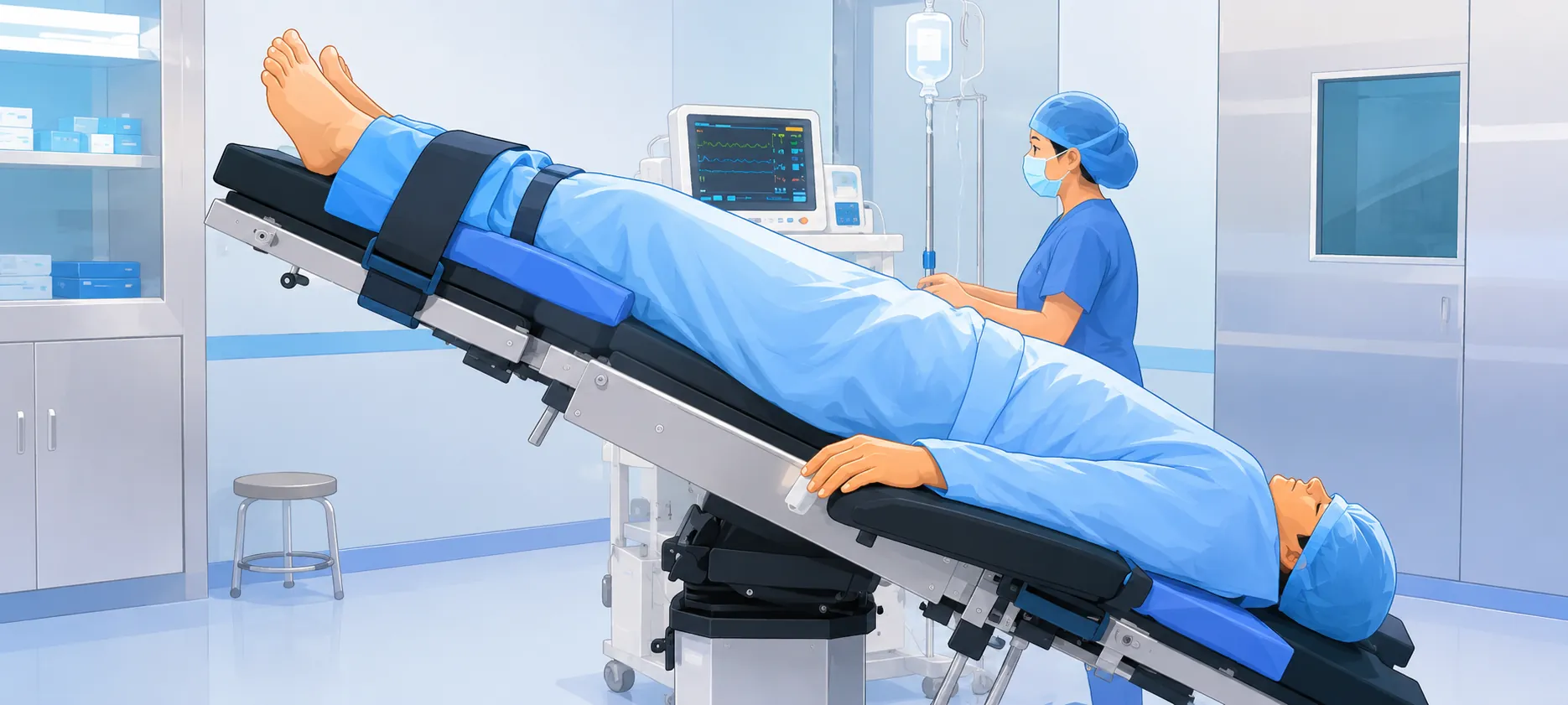
The Trendelenburg position is a medical position where you lie on your back with your feet raised higher than your head. It is often used during surgery, certain medical procedures, and specific emergency situations.
This position may look simple, but it has a clear medical purpose. It uses gravity to move organs, improve access during procedures, or help doctors place certain lines safely. Like any medical position, it must be used with care, especially if you have Neurological Disorders, Cardiovascular Issues, eye disease, Obesity, or breathing problems.
What Is The Trendelenburg Position?
The Trendelenburg position is a body position in which you lie flat on your back, while the bed or operating table is tilted so your head is lower than your feet. The angle is often around 15 to 30 degrees, depending on the procedure.
It is named after Friedrich Trendelenburg, a surgeon who used this position to improve access to the lower abdomen and pelvis during surgery.
In simple terms, the Trendelenburg position lets gravity move abdominal organs upwards, away from the pelvis. This gives doctors a clearer view and more working space during procedures.
Purpose Of The Trendelenburg Position
The main purpose of the Trendelenburg position is to help healthcare teams perform certain procedures more safely and effectively. It may be used to improve visibility during pelvic surgery, help with central venous catheter placement, support selected diagnostic procedures, or improve venous filling for a short time.
It is not a routine treatment for shock anymore. Earlier, it was used to improve blood flow to the heart and brain in low blood pressure. Current practice is more cautious because it can affect breathing, raise pressure inside the head and eyes, and worsen some Cardiovascular Issues.
How Is The Trendelenburg Position Performed?
Healthcare teams follow a careful process to position you safely.
You Are Placed On Your Back
You lie flat on a hospital bed or operating table.
The Table Is Tilted
The table is adjusted so your feet are higher than your head. The angle depends on the medical need.
Your Body Is Secured
Pads, straps, and positioning devices may be used to prevent slipping.
Pressure Points Are Protected
Your shoulders, arms, hips, back, and legs are supported to reduce the risk of Nerve Injuries.
Vital Signs Are Monitored
Your oxygen level, blood pressure, heart rhythm, and breathing are checked throughout the procedure.
The Position Is Adjusted When Needed
Doctors use the lowest effective tilt and avoid keeping you in this position longer than necessary.
Reverse Trendelenburg Position
The reverse Trendelenburg position is the opposite of the standard Trendelenburg position. In this position, your head is higher than your feet.
It is commonly used during upper abdominal surgery, gallbladder surgery, stomach procedures, and some head and neck procedures. It may also help reduce pressure around the head and eyes.
For some patients with glaucoma, raised pressure inside the head, or certain Neurological Disorders, reverse Trendelenburg may be safer than a head-down position. The final decision depends on your condition and the procedure being performed.
Steep Trendelenburg Position
The steep Trendelenburg position uses a stronger head-down tilt, often around 30 to 40 degrees. It is commonly used in robotic and minimally invasive pelvic surgeries, including some gynaecological, urological, and colorectal procedures.
This position gives surgeons better access to the pelvis. However, it can also increase pressure on the lungs, face, brain, and eyes. It may also raise the risk of slipping and Nerve Injuries if the body is not positioned properly.
People with Obesity, lung disease, Cardiovascular Issues, glaucoma, or certain Neurological Disorders may need extra care in this position.
Common Medical Uses Of The Trendelenburg Position
Doctors may use the Trendelenburg position for:
- Pelvic surgery
- Lower abdominal surgery
- Gynaecological procedures
- Urological procedures
- Colorectal surgery
- Robotic pelvic surgery
- Central venous catheter placement
- Selected spinal anaesthesia adjustments
- Certain CT myelogram procedures
- Short-term support during selected low blood pressure situations
- Improving access to veins in the neck or upper chest
The Trendelenburg position used for surgery may vary from mild to steep, depending on the surgical site and your health condition.
Benefits Of The Trendelenburg Position
The possible benefits include:
- Better surgical access to pelvic organs
- Improved visibility during lower abdominal procedures
- Easier movement of abdominal organs away from the pelvis
- Improved filling of neck and chest veins during central line placement
- Support for selected imaging and anaesthesia procedures
- Better working space during robotic surgery
- Short-term improvement in venous return in selected cases
These benefits are most useful when the position is used by trained healthcare professionals with proper monitoring.
Risks And Contraindications Of Trendelenburg
The Trendelenburg position is generally safe when used correctly, but it is not suitable for everyone. Risks may increase with longer procedures, steeper angles, pregnancy, high body weight, or existing health problems.
Possible risks include:
- Breathing difficulty due to pressure on the lungs
- Reduced lung capacity
- Raised pressure inside the head
- Raised pressure inside the eyes
- Worsening glaucoma symptoms or risk
- Facial or airway swelling
- Slipping on the operating table
- Skin pressure injuries
- Nerve Injuries, especially involving the shoulder or arm nerves
- Worsening of some Cardiovascular Issues
- Higher risk in people with Obesity
- Added risk in some Neurological Disorders
- Discomfort or dizziness after the position is reversed
The position may be avoided or modified in people with severe heart disease, severe lung disease, uncontrolled glaucoma, raised intracranial pressure, recent head injury, advanced pregnancy, or very high surgical risk.
Trendelenburg Position In Surgery
In surgery, the Trendelenburg position helps move abdominal organs away from the pelvis. This gives surgeons more space and a clearer view. It is especially useful in lower abdominal, pelvic, laparoscopic, and robotic procedures.
During steep Trendelenburg, careful teamwork is essential. The anaesthesia team watches breathing and circulation. The surgical team uses safe positioning devices. The nursing team checks pressure points and body alignment. These steps help reduce risks such as Nerve Injuries, skin damage, and breathing problems.
How To Adjust The Trendelenburg Position For Different Medical Conditions
Doctors adjust the Trendelenburg position based on your age, body weight, heart health, lung function, eye health, and neurological status. For a person with glaucoma, doctors may avoid steep or prolonged head-down positioning because it can raise eye pressure. For someone with a brain tumor, head injury, or raised intracranial pressure, a head-down tilt may be avoided because it can increase pressure inside the skull.
If you have Obesity, the care team may use a lower tilt, extra supports, careful airway monitoring, and shorter time in the position. If you have Cardiovascular Issues, your blood pressure and heart rhythm are watched closely. If you have Neurological Disorders, your team may choose modified positioning to reduce pressure and nerve strain.
The safest position is always the one that gives doctors enough access while creating the least stress on your body.
Trendelenburg Position Diagram
Image Direction:
Use a simple medical illustration showing a person lying on their back on a tilted hospital bed. The feet should be higher than the head by about 15 to 30 degrees. Add labels for head, feet, raised lower body, and downward tilt.
Caption:
Trendelenburg position diagram showing the body lying flat with the feet raised above the head to support specific surgical and medical procedures.
Tests And Health Checks Before Surgery Or Procedures
If you are scheduled for a procedure that may use the Trendelenburg position, your doctor may advise tests to assess your overall health and reduce risk.
Common tests may include:
- Complete blood count
- Blood sugar test
- Kidney function test
- Liver function test
- Electrolyte test
- Coagulation profile
- ECG
- Chest X-ray when needed
- Eye pressure assessment if you have glaucoma
- Cardiac evaluation if you have Cardiovascular Issues
- Neurological assessment if you have Neurological Disorders
- Fitness for anaesthesia assessment
These tests help your care team plan safer positioning, anaesthesia, and recovery.
Conclusion
The Trendelenburg position is a useful medical position that helps doctors perform surgeries, place central lines, and carry out selected procedures. Its main benefit comes from gravity, which improves access to certain body areas. However, it must be used carefully because it can affect breathing, eye pressure, brain pressure, circulation, and nerves.
If you are preparing for surgery or managing long-term health conditions, preventive testing can help you and your doctor understand your health markers better. Metropolis Healthcare supports proactive care with 4,000+ tests, full body checkups, speciality testing, accurate reports, quick turnaround time, and home sample collection. You can book tests through the website, call, app, or WhatsApp, supported by a strong home collection network and 10,000 touchpoints.
FAQ
What Is The Difference Between Trendelenburg And Reverse Trendelenburg?
In the Trendelenburg position, your feet are higher than your head. It is often used for pelvic surgery, lower abdominal surgery, and central venous catheter placement. In the reverse Trendelenburg position, your head is higher than your feet. It is often used for upper abdominal surgery and may help reduce pressure around the head and eyes.
Can Trendelenburg Position Cause Harm?
Yes, it can cause harm if used for too long, at a steep angle, or in people with certain health risks. Possible problems include breathing difficulty, raised eye pressure, increased pressure inside the head, slipping, pressure injuries, and nerve strain. Healthcare teams reduce these risks through careful positioning and monitoring.
When Should The Trendelenburg Position Be Avoided?
It may be avoided or modified in people with severe lung disease, serious Cardiovascular Issues, uncontrolled glaucoma, raised intracranial pressure, certain Neurological Disorders, recent head injury, advanced pregnancy, or severe Obesity. Your doctor decides based on the procedure and your overall health.
What Is The Purpose Of Trendelenburg Position?
The purpose of Trendelenburg position is to use gravity to improve access during certain medical procedures. It helps move abdominal organs away from the pelvis during surgery and can make some veins easier to access during central line placement.
What Is Steep Trendelenburg Position Used For?
Steep Trendelenburg position is mainly used for robotic and minimally invasive pelvic surgeries. It gives surgeons more working space in the pelvis, but it requires close monitoring because it can affect the lungs, eyes, brain pressure, and nerves.
Is Trendelenburg Position Used For Low Blood Pressure?
It may be used briefly in selected situations, but it is no longer recommended as a routine treatment for shock or low blood pressure. Doctors now use more targeted treatments based on the cause of low blood pressure.
Why Is Trendelenburg Position Important In Surgery?
It improves surgical access, especially in pelvic and lower abdominal procedures. By tilting the body head-down, gravity moves organs away from the surgical area, helping the surgeon see and work more clearly.
References
- Ghomi A, Kramer C, Askari R, Chavan NR, Einarsson JI. Trendelenburg position in gynecologic robotic-assisted surgery. J Minim Invasive Gynecol. 2012;19(4):485-489. PMID: 22503549.
- Zillioux JM, Krupski TL. Patient positioning during minimally invasive surgery: what is current best practice? Robot Surg. 2017;4:69-76.
- AORN. Guideline for positioning the patient. AORN J. 2017;105(4):P8-P10.