

 App Store
 Google Play







Hearing that you or a loved one may need treatment for a brain tumour can feel overwhelming. Your doctor may discuss Gamma Knife radiosurgery if the tumour is small, deep, hard to reach, or suitable for focused radiation treatment.
Despite the name, Gamma Knife surgery does not use a knife. It does not involve a cut, incision, or removal of skull bone. It is a highly precise form of stereotactic radiosurgery that uses focused radiation beams to target abnormal tissue in the brain.
Gamma Knife treatment may be used for some brain tumours, brain metastases, blood vessel abnormalities, and certain nerve conditions. It aims to stop tumour growth, shrink the tumour over time, or control symptoms while reducing harm to nearby healthy brain tissue.
What Is Gamma Knife Radiosurgery?
Gamma Knife radiosurgery is a non-invasive radiation treatment used mainly for conditions in the brain. It uses many small beams of gamma radiation that meet at one exact target. Each beam is weak as it passes through healthy tissue, but together they deliver a strong dose to the planned treatment area.
Gamma Knife therapy is called "surgery" because it can treat a precise area in a way that may achieve results similar to surgery. However, there is no surgical cut. You usually do not need general anaesthesia, and many people go home the same day.
Doctors may use Gamma Knife radiosurgery to treat benign brain tumours, malignant brain tumours, brain metastases, arteriovenous malformations, trigeminal neuralgia, and selected functional brain conditions.
How Gamma Knife Treats Brain Tumors
Gamma Knife treats brain tumors by delivering focused radiation to tumour cells. The radiation damages the DNA inside these cells. This makes it harder for the cells to multiply. Over time, the tumour may stop growing, shrink, or become inactive.
The full effect is not always immediate. Some tumours respond over weeks or months. Benign tumours may stop growing first and shrink slowly over a longer period. Brain metastases may respond faster, but follow-up imaging is needed to check progress.
Gamma Knife treatment is planned carefully using MRI, CT, or angiography when needed. This helps the care team map the exact size, shape, and location of the tumour. The goal is to treat the tumour while limiting radiation exposure to healthy tissue.
Benefits Of Gamma Knife Surgery
Gamma Knife surgery may offer several benefits in suitable patients:
- It does not need an incision.
- It can treat deep or hard-to-reach brain areas.
- It may reduce the need for open brain surgery in selected cases.
- It usually has a shorter recovery time than traditional surgery.
- It can often be done as a day-care procedure.
- It can target one or more small lesions with high precision.
- It may be useful when surgery carries higher risk.
- It may be combined with surgery, chemotherapy, immunotherapy, or other treatments when needed.
- It may help protect nearby healthy brain tissue compared with wider radiation fields.
The benefits depend on the type, size, number, and location of tumours. Your doctor will explain whether Gamma Knife radiosurgery is appropriate for your case.
Who Is A Candidate For Gamma Knife?
You may be considered for Gamma Knife treatment if you have:
- A small or medium-sized brain tumour
- A tumour in a deep or sensitive brain area
- A tumour that is difficult to remove safely by open surgery
- A brain metastasis from cancer elsewhere in the body
- A benign tumour such as meningioma, pituitary adenoma, or acoustic neuroma
- A vascular condition such as arteriovenous malformation
- Trigeminal neuralgia that has not responded well to medicines
- A medical condition that makes open surgery risky
- A remaining tumour after previous surgery
- A recurrent tumour after earlier treatment
Gamma Knife may not be suitable for every tumour. Very large tumours, tumours causing severe pressure, or conditions needing urgent decompression may need other forms of care.
Gamma Knife Procedure Overview
Before the procedure, you meet the treatment team. This may include a neurosurgeon, radiation oncologist, radiologist, medical physicist, and trained nurses.
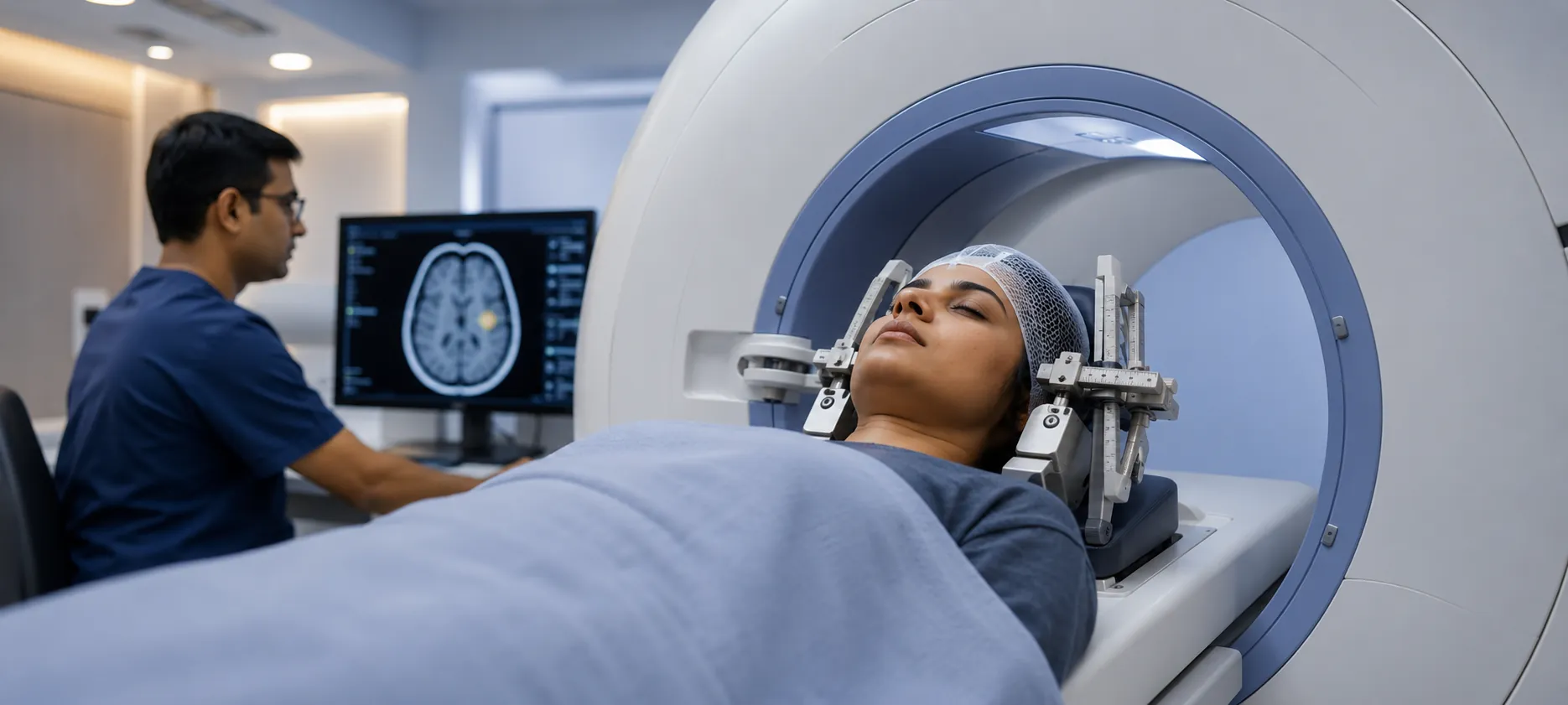
On the day of Gamma Knife surgery, your head is kept still using either a head frame or a custom mask, depending on the system and treatment plan. If a frame is used, the pin sites are numbed first. You may feel pressure, but the procedure is not usually painful.
Next, imaging tests such as MRI or CT are done. These images help the team plan the radiation dose and exact target. Once the plan is ready, you lie on the treatment table. The table moves into the Gamma Knife unit, and radiation is delivered to the planned area.
The treatment itself may take from a few minutes to a few hours. You are monitored throughout. You can usually communicate with the team during the procedure.
Recovery After Gamma Knife Surgery
Recovery is usually quicker than open brain surgery. Many people return home the same day. Some may need overnight observation, depending on their condition.
You may feel tired after the procedure. Mild headaches, nausea, scalp soreness, fatigue, or dizziness can happen for a short time. If a frame was used, the pin sites may feel tender for a few days.
Your doctor may prescribe medicines to reduce the risk of brain swelling. Follow-up MRI or CT scans are important because results develop over time. Your care team will tell you when to return for review.
Seek urgent medical help if you have severe headaches, repeated vomiting, weakness, vision changes, confusion, worsening dizziness, or seizures.
Gamma Knife Treatment Cost
Gamma Knife treatment cost can vary widely. It depends on the city, hospital, technology used, number of lesions treated, imaging needs, doctor fees, hospital stay, medicines, and whether additional procedures are required.
The cost may also differ for benign tumours, malignant tumours, brain metastases, trigeminal neuralgia, or arteriovenous malformations. Insurance coverage may vary by policy and diagnosis.
Ask your treating hospital for a written estimate that includes consultation, imaging, planning, treatment, medicines, hospital stay if needed, and follow-up visits.
Risks And Side Effects Of Gamma Knife
Gamma Knife radiosurgery is generally considered safe in suitable patients, but side effects can occur. Your personal risk depends on the treated area, radiation dose, tumour type, tumour size, and your overall health.
Possible side effects include:
- Headaches
- Nausea
- Fatigue
- Dizziness
- Scalp tenderness at frame pin sites
- Temporary swelling near the treated area
- Hair thinning if the treated area is close to the scalp
- Numbness or tingling
- Balance problems
- Vision changes, depending on tumour location
- Brain swelling
- Seizures
- Bleeding, rarely
- Radiation Necrosis, rarely
Brain swelling may happen soon after treatment or months later. It is often managed with medicines, but it needs medical attention. Radiation Necrosis is delayed injury to treated brain tissue. It may appear months or years after radiation and can sometimes look like tumour progression on scans.
Seizures are uncommon but important to recognise. People with certain tumour locations, previous seizures, or brain irritation may have a higher risk. Your doctor may prescribe anti-seizure medicine if needed.
Gamma Knife Vs. Traditional Surgery
Traditional brain surgery involves an incision and opening part of the skull to reach the tumour. It can remove tumour tissue immediately and may be needed when the tumour is large, causing pressure, bleeding, or needs biopsy.
Gamma Knife radiosurgery does not remove the tumour physically. It uses focused radiation to control or shrink the tumour over time. It may be preferred when the tumour is small, deep, hard to reach, or when open surgery is risky.
Both treatments have important roles. In some cases, surgery and Gamma Knife are used together. For example, surgery may remove a large tumour, and Gamma Knife may treat a small remaining part later.
Your doctor will recommend treatment based on tumour type, location, size, symptoms, age, general health, and expected outcome.
Tests To Do Before And After Gamma Knife
Before Gamma Knife surgery, your doctor may advise:
- MRI brain with contrast
- CT scan, if needed
- Cerebral angiography for vascular lesions
- Blood pressure check
- Complete blood count
- Kidney function test, especially if contrast is used
- Liver function test
- Blood sugar test
- Coagulation profile
- Electrolyte test
- Pregnancy test, when relevant
- Review of medicines, implants, allergies, and past reports
After Gamma Knife treatment, follow-up may include:
- MRI brain at scheduled intervals
- CT scan, if MRI is not suitable
- Neurological examination
- Review of symptoms such as headaches, nausea, fatigue, dizziness, weakness, or seizures
- Blood tests if medicines such as steroids or anti-seizure medicines are used
- Hormone tests for pituitary tumours, when needed
- Cancer marker tests or systemic imaging in people with metastatic cancer
- Ongoing monitoring for brain swelling or Radiation Necrosis
These tests help your doctor track tumour response, detect side effects early, and adjust treatment when needed.
How Effective Is Gamma Knife Surgery?
Gamma Knife surgery can be highly effective in selected patients. Its main goal may be tumour control, tumour shrinkage, symptom relief, or prevention of further growth.
Success depends on several factors, including tumour type, size, location, radiation dose, number of lesions, previous treatments, and overall health. Small tumours and well-defined targets often respond better.
Some results are seen within weeks. Others may take months or longer. Benign tumours may stop growing before they shrink. Brain metastases may need closer follow-up because new lesions can develop elsewhere in the brain.
Regular imaging is essential. A scan may show temporary changes due to treatment effect, inflammation, brain swelling, or Radiation Necrosis. Your specialist will interpret these findings carefully.
Gamma Knife For Different Types Of Brain Tumors
Gamma Knife radiosurgery may be used for different tumour types, including:
- Meningioma: May help control growth, especially for small tumours or remaining tumour after surgery.
- Acoustic Neuroma: May help stop growth while aiming to protect hearing and facial nerve function when possible.
- Pituitary Adenoma: May be used for small residual or recurrent tumours, sometimes along with hormone monitoring.
- Brain Metastases: Can target one or more small lesions that have spread to the brain from cancers elsewhere in the body.
- Glioma: May be considered in selected cases, often as part of a broader treatment plan.
- Craniopharyngioma: May be used for small residual or recurrent disease in selected patients.
- Chordoma And Chondrosarcoma: May be considered for skull base lesions where precision is important.
Not every tumour is suitable. Larger tumours, tumours close to sensitive nerves, or tumours causing severe symptoms may need different treatment.
Is Gamma Knife Surgery Painful?
Gamma Knife surgery is not usually painful. The radiation itself cannot be felt. It does not create heat, noise, or a cutting sensation.
If a head frame is used, local anaesthetic is given before the pins are placed. You may feel pressure during frame fitting. Some people feel mild soreness at the pin sites later. Medicines can help manage discomfort.
If a mask-based system is used, you may feel some tightness from the mask. Tell your care team if you feel anxious or uncomfortable. They can help you stay calm and still.
Frequently Asked Questions
How Does Gamma Knife Surgery Treat Brain Tumors?
Gamma Knife surgery treats brain tumors by focusing many beams of gamma radiation on a precise target. The radiation damages tumour cell DNA. This can stop tumour cells from multiplying and may cause the tumour to shrink or become inactive over time.
What Are The Success Rates Of Gamma Knife Surgery?
Success rates vary by tumour type, size, location, and overall health. In many suitable cases, Gamma Knife radiosurgery provides good tumour control. Your doctor can give a more specific estimate after reviewing your MRI, diagnosis, and treatment goals.
What Are The Side Effects Of Gamma Knife Surgery?
Possible side effects include:
- Headaches
- Nausea
- Fatigue
- Dizziness
- Scalp soreness
- Temporary hair thinning near the treated area
- Brain swelling
- Seizures
- Radiation Necrosis
- Vision, balance, or nerve-related symptoms, depending on the treatment site
Contact your doctor urgently if you develop severe headaches, repeated vomiting, weakness, confusion, new vision problems, or seizures.
Is Gamma Knife Surgery Safe For All Types Of Brain Tumors?
No. Gamma Knife surgery is not suitable for all brain tumours. It is often used for small, well-defined tumours or lesions. Large tumours, tumours causing severe pressure, or tumours needing tissue diagnosis may require surgery, biopsy, chemotherapy, wider radiation, or another approach.
What Tests Should Be Done Before Gamma Knife Surgery?
Your doctor may advise:
- MRI brain with contrast
- CT scan
- Cerebral angiography, if treating a blood vessel abnormality
- Complete blood count
- Kidney function test
- Coagulation profile
- Blood sugar test
- Pregnancy test, when relevant
- Review of implants, allergies, and medicines
The exact tests depend on your diagnosis and treatment plan.
How Long Does It Take For Gamma Knife Treatment To Show Results?
Results may take weeks, months, or longer. Brain metastases may respond within weeks to months. Benign tumours may stop growing first and shrink slowly over time. Arteriovenous malformations may take years to close fully. Follow-up scans are needed to confirm response.
What Is The Cost Of Gamma Knife Surgery?
Gamma Knife surgery cost depends on the hospital, city, tumour type, number of lesions, imaging, treatment complexity, medicines, hospital stay, and follow-up needs. Ask your treatment centre for a detailed estimate and check your insurance coverage before the procedure.
Can Gamma Knife Be Used For Metastatic Brain Tumors?
Yes. Gamma Knife can be used for selected metastatic brain tumors. It is often considered when there are one or more small brain metastases that can be targeted precisely. Your cancer type, number of lesions, lesion size, symptoms, and overall treatment plan will guide the decision.
How Does Gamma Knife Compare To Traditional Brain Surgery?
Gamma Knife does not involve an incision and usually has a shorter recovery time. Traditional surgery can remove tumour tissue immediately and may be better for large tumours, tumours causing pressure, or cases needing biopsy. Both treatments can be useful, and some patients may need both.
Conclusion
Gamma Knife radiosurgery is a precise, non-invasive treatment option for selected brain tumours and other brain conditions. It can treat areas that may be difficult to reach with open surgery and usually allows quicker recovery. Still, it needs careful planning, follow-up scans, and monitoring for side effects such as brain swelling, Radiation Necrosis, and seizures.
Along with treatment, regular health monitoring can support safer recovery and long-term care. Blood tests, kidney function tests, hormone tests, and follow-up investigations may be needed before or after treatment, depending on your condition.
Metropolis Healthcare can support your diagnostic and preventive health needs with 4,000+ tests, speciality testing, full body checkups, home sample collection, accurate reports, and quick turnaround time. With easy booking through the website, call, app, and WhatsApp, and a strong home collection network with 10,000 touchpoints, Metropolis helps you stay informed about your health markers during treatment planning, recovery, and routine wellness monitoring.
References
- Hall WA, Paulson E, Li XA. Stereotactic Radiosurgery And Stereotactic Body Radiation Therapy. StatPearls. Updated 2025.
- Desai R, Rich KM. Therapeutic Role Of Gamma Knife Stereotactic Radiosurgery In Neuro-Oncology. Mo Med. 2020;117(1):33-38. PMID: 32158048.
- Miller JA, Bennett EE, Xiao R, et al. Association Between Radiation Necrosis And Tumor Biology After Stereotactic Radiosurgery For Brain Metastasis. Int J Radiat Oncol Biol Phys. 2016;96(5):1060-1069. PMID: 27742540.
- Mayo ZS, Halasz LM, Lo SS, et al. The Dilemma Of Radiation Necrosis From Diagnosis To Treatment In The Management Of Brain Metastases. Neurooncol Pract. 2024;11(2):134-145. PMID: 38463283.
- Johannwerner L, Seidel C, Stieb S, et al. Radiation Necrosis Following Stereotactic Radiosurgery Or Fractionated Stereotactic Radiotherapy For Brain Metastases. Cancers. 2023;15(10):2777. PMID: 37345018.