

 App Store
 Google Play







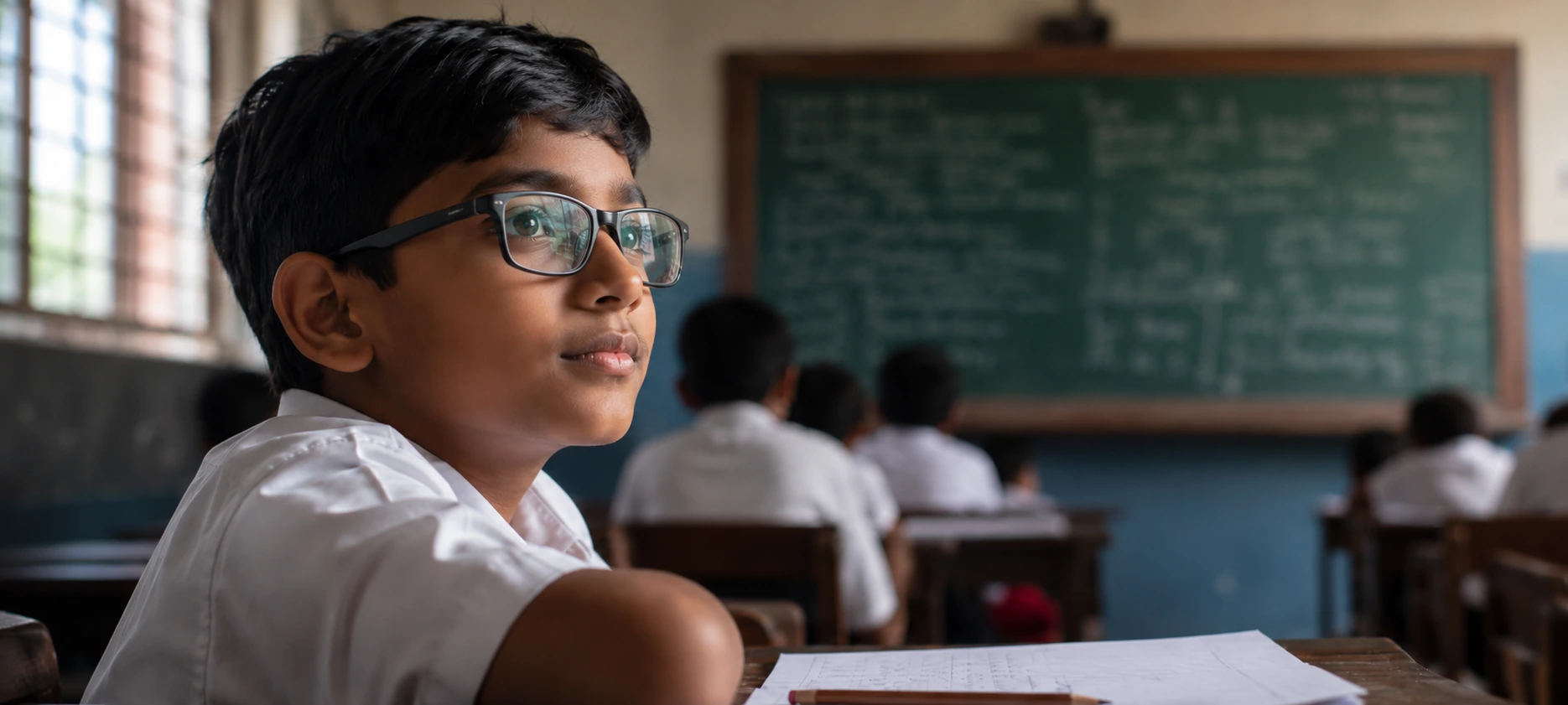
Myopia is a common eye condition that makes distant objects look blurry, while nearby objects remain clear. It is also called nearsightedness or shortsightedness.
If you have myopia, you may find it difficult to read road signs, see a classroom board, watch a screen from a distance, or recognise faces across a room. The good news is that myopia can be corrected with the right vision correction lenses and managed well with regular eye checkups.
What Is Myopia?
Myopia is a refractive error. This means your eye does not bend light in the right way.
In a normal eye, light focuses directly on the retina, which is the light-sensitive layer at the back of your eye. In myopia, light focuses in front of the retina instead of on it. This makes faraway objects look blurred.
Myopia often starts in childhood. It may progress during school years and teenage years, especially during growth spurts. In many people, it becomes stable in early adulthood.
How Myopia Affects Vision
With myopia, your near vision is usually clear. You may be able to read a book or use your phone without trouble. But your distance vision may be unclear.
For example, you may notice blurred distance vision while:
- Reading traffic signs
- Watching a film from the back of a hall
- Looking at a school board
- Playing outdoor sports
- Seeing presentations from a distance
- Recognising someone across the road
This happens because the shape of the eye affects how light enters and focuses. In many cases, the eyeball is slightly longer than usual. Sometimes, the cornea is too curved. The cornea is the clear front part of your eye.
Common Causes Of Myopia
There is no single cause of myopia. It usually develops due to a mix of genetic and lifestyle factors.
Common myopia causes include:
- Family history: Your risk is higher if one or both parents have myopia.
- Long hours of near work: Reading, writing, studying, or using digital screens for long periods may increase the risk.
- Less outdoor time: Children who spend very little time outdoors may have a higher risk of developing myopia.
- Eye growth during childhood: Myopia often progresses as the eyes grow.
- Certain health conditions: In some adults, changes in vision may be linked to diabetes, cataracts, or other health concerns.
Screen use alone does not always cause myopia. However, long periods of close-up focus, poor lighting, and fewer outdoor activities can add strain to your eyes.
Symptoms Of Myopia
Myopia symptoms can be mild at first. You may not notice them until distance vision becomes clearly affected.
Common symptoms of myopia include:
- Blurry vision when looking at distant objects
- Squinting to see clearly
- Headaches after visual tasks
- Eye strain or tired eyes
- Difficulty seeing while driving, especially at night
- Sitting too close to the television
- Holding books, phones, or tablets close to the face
- Poor attention in class due to difficulty seeing the board
In children, myopia may show up as frequent squinting, rubbing the eyes, complaints of headaches, or reduced school performance. If you notice these signs, an eye checkup can help identify the cause.
Types Of Myopia
Eye specialists may classify myopia based on its severity and pattern.
Common types include:
- Simple myopia: This is the most common type. It can usually be corrected with glasses or contact lenses.
- High myopia: This refers to a stronger degree of myopia. It needs closer monitoring because it can increase the risk of eye complications.
- Pathological myopia: This is a more serious form linked with structural changes in the eye. It may affect the retina and needs specialist care.
- Progressive myopia: This means myopia keeps increasing over time, often during childhood or adolescence.
Your eye specialist can tell you which type you have after a detailed eye examination.
Risk Factors For Developing Myopia
You may have a higher risk of myopia if:
- You have a parent or sibling with myopia
- You spend long hours reading or using screens
- You do not spend enough time outdoors
- You had myopia from an early age
- Your prescription is increasing quickly
- You live in an urban setting with limited outdoor activity
- You do not get regular eye checkups
Children need special attention because their vision can change quickly. Early detection helps manage myopia better and supports learning, safety, and day-to-day comfort.
When To See An Eye Specialist
You should see an eye specialist if you or your child has trouble seeing distant objects clearly. You should also book an eye checkup if there is frequent squinting, eye strain, headaches, or difficulty seeing the board at school.
Seek urgent medical help if you notice:
- Sudden loss of vision
- Flashes of light
- A sudden increase in floaters
- A dark shadow in your vision
- Sudden blurred vision in one eye
These symptoms may not be due to simple myopia and need prompt evaluation.
How Myopia Is Diagnosed
Myopia is diagnosed through an eye examination. Your eye specialist may check how clearly you see at different distances and measure your refractive error.
The examination may include:
- A visual acuity test using an eye chart
- Refraction testing to find the correct lens power
- Eye focusing assessment
- Eye health examination
- Retinal examination, especially if you have high myopia
Your prescription for myopia is usually written with a minus number, such as -1.50 or -3.00. A higher minus number means stronger myopia.
Treatment Options For Myopia
Myopia treatment depends on your age, prescription, lifestyle, eye health, and whether your myopia is stable or progressing.
Eyeglasses
Eyeglasses are the most common way to correct myopia. They help focus light properly on the retina, so distant objects look clearer.
Some people need glasses all day. Others may need them only for driving, watching a board, or other distance tasks.
Contact Lenses
Contact lenses can provide clear and wider vision for some people. They may be useful for sports or active routines.
Good hygiene is very important. Poor contact lens care can increase the risk of eye infection. Always use contact lenses as advised by your eye specialist.
Orthokeratology
Orthokeratology, also called Ortho-K, uses specially designed rigid contact lenses worn overnight. These lenses gently reshape the cornea for temporary clear vision during the day.
This option may be used in selected cases, especially for myopia control in children. It needs careful fitting and regular follow-up.
Low-Dose Atropine Eye Drops
Low-dose atropine eye drops may be prescribed for children with progressive myopia. They do not correct blurred vision directly. Their role is to help slow myopia progression in suitable cases.
These drops should only be used under medical supervision.
Special Myopia Control Lenses
Some children may benefit from special glasses or contact lenses designed to slow myopia progression. These are different from standard lenses and must be prescribed after a detailed eye assessment.
Refractive Surgery
Adults with stable myopia may consider refractive surgery. Procedures such as LASIK, PRK, or other laser vision correction methods reshape the cornea to improve focus.
Surgery is not suitable for everyone. Your eye specialist will check your age, corneal thickness, prescription stability, dry eye status, and overall eye health before advising it.
Ways To Prevent Or Slow Myopia Progression
You may not be able to prevent myopia completely, especially if it runs in your family. But some habits can support healthy vision and may help slow progression in children.
Helpful steps include:
- Spend more time outdoors during daylight
- Take breaks during reading and screen use
- Follow the 20-20-20 rule: every 20 minutes, look 20 feet away for 20 seconds
- Avoid reading in dim light
- Keep screens at a comfortable distance
- Encourage children to hold books and devices away from the face
- Limit long, continuous periods of close-up work
- Schedule regular eye checkups
- Use prescribed glasses or lenses correctly
These steps are simple, but consistency matters. They are especially useful for children whose eyes are still developing.
Complications Of High Myopia
Most people with mild or moderate myopia do well with glasses, contact lenses, or other treatment options. However, high myopia needs closer monitoring.
Possible complications of high myopia include:
- Retinal thinning
- Retinal tears or detachment
- Glaucoma
- Cataracts
- Myopic maculopathy
- Abnormal blood vessel growth in the eye
This does not mean everyone with high myopia will develop complications. It means regular eye examinations are important so that changes can be detected early.
Living Well With Myopia
Myopia can be managed well with the right care. The key is not to ignore changes in vision.
Wear your prescribed glasses or contact lenses as advised. Avoid using outdated prescriptions. Make sure children get regular eye checks, especially if they complain of unclear distance vision or have trouble in school.
Along with eye care, overall health monitoring also matters. Blood sugar changes, nutritional deficiencies, and certain health conditions can affect vision. Staying informed about your health supports better long-term wellbeing.
Key Takeaways
- Myopia means distant objects look blurry, while nearby objects usually appear clear.
- It happens when light focuses in front of the retina instead of directly on it.
- Common myopia symptoms include blurred distance vision, squinting, headaches, and eye strain.
- Myopia causes include family history, long hours of close-up work, less outdoor time, and eye growth during childhood.
- Myopia treatment may include eyeglasses, contact lenses, Ortho-K, low-dose atropine, special myopia control lenses, or refractive surgery.
- High myopia needs regular monitoring because it may increase the risk of retinal and other eye complications.
- Children should have timely eye checkups because early correction supports learning and daily comfort.
Conclusion
Myopia is common, manageable, and easier to control when detected early. If you or your child has blurred distance vision, squinting, headaches, or eye strain, an eye examination can help you understand the cause and choose the right treatment.
Good vision care is also part of preventive healthcare. Along with regular eye checkups, routine health monitoring can help you stay aware of important health markers such as blood sugar, cholesterol, and vitamin levels. Metropolis Healthcare supports proactive wellness with full body checkup options, blood test at home services, easy booking through website, app, call, and WhatsApp, quick turnaround time, and reliable reports backed by expert pathologists. With 4,000+ tests and a strong home collection network, Metropolis makes preventive health monitoring simple and accessible.
FAQs About Myopia
What Is Myopia In The Eye?
Myopia is an eye condition in which distant objects look blurry, while nearby objects look clear. It happens when light focuses in front of the retina instead of directly on it.
What Does Vision Look Like With Myopia?
With myopia, you may see nearby objects clearly but struggle to see things far away. Road signs, classroom boards, television screens, or distant faces may look blurred.
Can Myopia Be Cured?
Myopia cannot usually be reversed naturally once the shape of the eye has changed. However, it can be corrected with glasses, contact lenses, or refractive surgery. In children, some treatments may help slow its progression.
Can Screen Time Cause Myopia?
Screen time may contribute to eye strain and may be linked with myopia risk when it involves long hours of close-up focus and reduced outdoor time. Taking breaks and spending time outdoors can support healthier eye habits.
Is Myopia Common In Children?
Yes. Myopia commonly starts in childhood and may increase during school years. Regular eye checkups are important because children may not always realise or explain that their distance vision is blurry.
References
- National Eye Institute. Nearsightedness: Myopia. Updated 2024.
- World Health Organization. World Report On Vision. Geneva: World Health Organization. 2019.
- Flitcroft DI, He M, Jonas JB, Jong M, Naidoo K, Ohno-Matsui K, et al. IMI: Defining And Classifying Myopia: A Proposed Set Of Standards For Clinical And Epidemiologic Studies. Invest Ophthalmol Vis Sci. 2019;60(3):M20-M30. PMID: 30817826.
- Holden BA, Fricke TR, Wilson DA, Jong M, Naidoo KS, Sankaridurg P, et al. Global Prevalence Of Myopia And High Myopia And Temporal Trends From 2000 Through 2050. Ophthalmology. 2016;123(5):1036-1042. PMID: 26875007.
- VanderVeen DK, Kraker RT, Pineles SL, Hutchinson AK, Wilson LB, Galvin JA, et al. Use Of Orthokeratology For The Prevention Of Myopic Progression In Children: A Report By The American Academy Of Ophthalmology. Ophthalmology. 2019;126(4):623-636. PMID: 30476518.
- Ohno-Matsui K, Wu PC, Yamashiro K, Vutipongsatorn K, Fang Y, Cheung CMG, et al. IMI Pathologic Myopia. Invest Ophthalmol Vis Sci. 2021;62(5):5. PMID: 33909040.
- Xiong S, Sankaridurg P, Naduvilath T, Zang J, Zou H, Zhu J, et al. Time Spent In Outdoor Activities In Relation To Myopia Prevention And Control: A Meta-Analysis And Systematic Review. Acta Ophthalmol. 2017;95(6):551-566. PMID: 28251836.