

 App Store
 Google Play







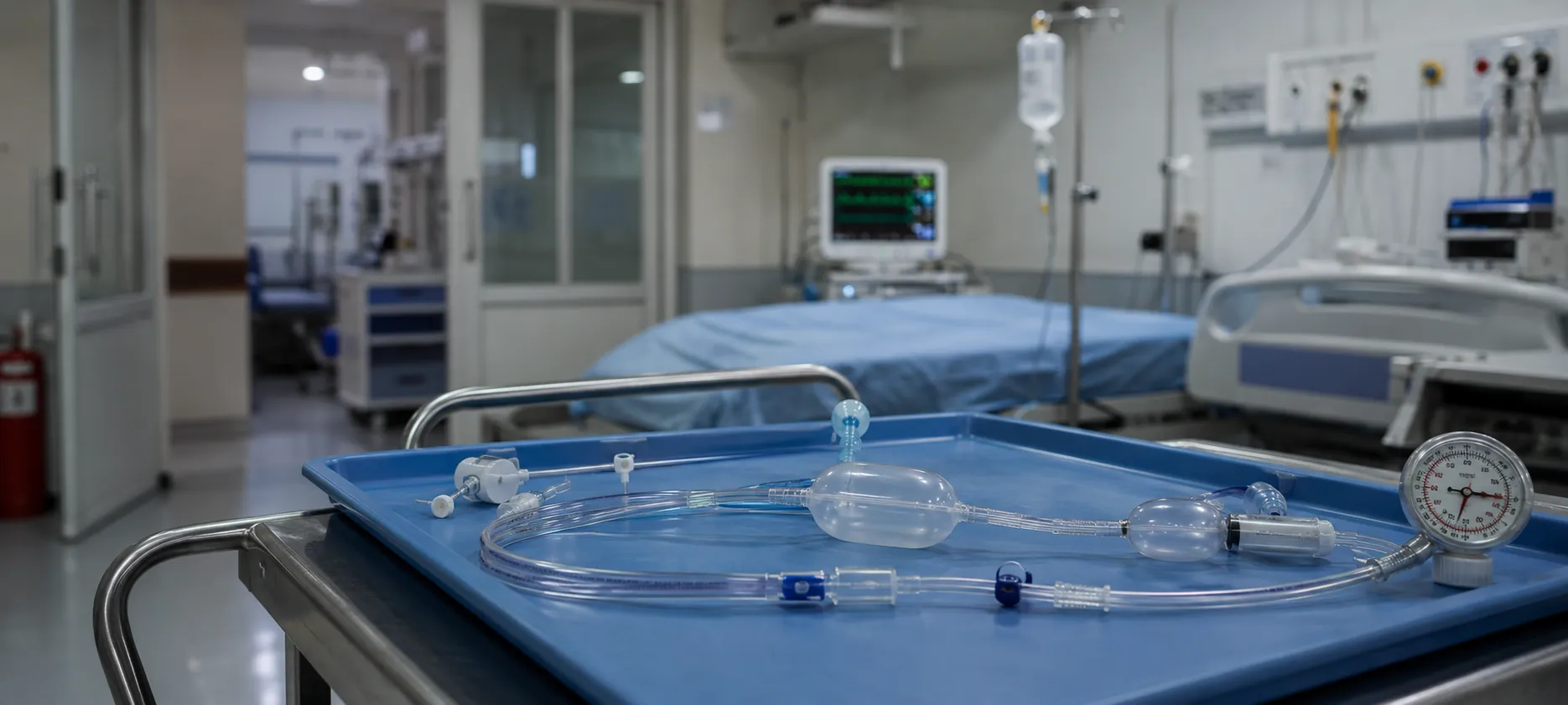
A Sengstaken-Blakemore tube is an emergency medical device used to control severe bleeding from swollen veins in the food pipe or upper stomach. These swollen veins are called varices. They can rupture and cause life-threatening internal bleeding, most often in people with advanced liver disease or portal hypertension.
Today, doctors usually prefer medicines, endoscopy, band ligation, stenting, or procedures such as TIPS to manage variceal bleeding. Even so, the Sengstaken-Blakemore tube still has an important role in critical emergencies. It can temporarily stop bleeding and give the medical team time to stabilise you and plan definitive treatment.
What Is A Sengstaken-Blakemore Tube?
A Sengstaken-Blakemore tube, also called an SB tube, is a long flexible tube used for balloon tamponade. Tamponade means applying pressure to stop bleeding.
The tube is usually passed through the mouth or nose into the stomach. It has inflatable balloons that press against bleeding varices in the stomach and oesophagus. It also has a suction channel that helps remove blood and stomach contents.
A standard Sengstaken-Blakemore tube has three main parts:
- A gastric balloon that sits in the stomach
- An oesophageal balloon that sits in the oesophagus
- A gastric suction port that removes blood and fluid from the stomach
It is not a routine treatment. It is usually used as a temporary, last-resort measure when bleeding is severe and other treatments are unavailable, delayed, or unsuccessful.
How Does The Sengstaken-Blakemore Tube Work?
The Sengstaken-Blakemore tube works by applying direct pressure to bleeding varices.
First, the gastric balloon is inflated inside the stomach. The tube is then gently pulled upwards so the balloon presses against the junction between the stomach and the oesophagus. This pressure can slow or stop bleeding from gastric or lower oesophageal varices.
If bleeding continues, the oesophageal balloon may be inflated. This balloon presses against the walls of the oesophagus and compresses bleeding veins. The suction port helps remove blood, reduce stomach distension, and monitor whether bleeding is still active.
This control is temporary. The tube gives doctors time to correct blood loss, protect breathing, arrange endoscopy, or move you to a centre where advanced procedures are available.
When Is A Sengstaken-Blakemore Tube Used?
Doctors may use a Sengstaken-Blakemore tube in selected emergency situations such as:
- Severe upper gastrointestinal bleeding from oesophageal varices
- Bleeding gastric varices when urgent control is needed
- Variceal bleeding that does not respond to medicines and endoscopy
- Lack of immediate access to endoscopic treatment
- Need to stabilise a patient before transfer to a specialist centre
- Rebleeding after initial variceal treatment
- A bridge to procedures such as TIPS or surgery
It is most often linked to bleeding caused by portal hypertension, commonly seen in advanced liver disease. It may also be considered when massive bleeding makes endoscopic visibility difficult.
Sengstaken-Blakemore Tube Insertion Process
Sengstaken-Blakemore tube insertion is a high-risk emergency procedure. It is done only by trained healthcare professionals in a monitored setting.
The usual process includes:
Airway Protection
Doctors often secure the airway with intubation before insertion. This reduces the risk of vomiting, blood entering the lungs, aspiration pneumonia, and airway obstruction.
Patient Preparation
The patient is monitored closely. Blood pressure, pulse, oxygen level, bleeding status, and consciousness are assessed. Blood transfusion and medicines may be started.
Tube Check
The balloons are checked for leaks before insertion. The tube is lubricated and marked to guide depth.
Tube Placement
The deflated tube is passed through the mouth or nose into the stomach.
Position Confirmation
Placement is confirmed, usually with imaging, before full balloon inflation. This step is essential because wrong placement can cause serious harm.
Gastric Balloon Inflation
The gastric balloon is inflated according to the hospital protocol. It is then pulled gently upwards to apply pressure at the gastro-oesophageal junction.
Traction Application
Controlled traction may be applied to maintain pressure. This must be carefully monitored.
Oesophageal Balloon Inflation, If Needed
If bleeding continues, the oesophageal balloon may be inflated using a manometer to monitor pressure.
Ongoing Monitoring
The team checks for bleeding control, breathing problems, pain, tube movement, and signs of complications.
Sengstaken-Blakemore Tube Pressure Guidelines
Sengstaken-Blakemore tube pressure must be managed with great care. The gastric balloon is usually inflated by volume, while the oesophageal balloon is inflated and monitored by pressure.
Protocols may vary, but the gastric balloon is commonly inflated gradually after placement is confirmed. The oesophageal balloon, when required, is often kept around 30 to 45 mmHg, depending on clinical need and local guidelines. A manometer is used to avoid excessive pressure.
Too little pressure may fail to stop bleeding. Too much pressure can damage tissue and lead to ulcerations, tissue death, or perforation. The tube is generally kept in place for the shortest possible time, often less than 24 hours and rarely beyond 24 to 36 hours.
Potential Risks Of Sengstaken-Blakemore Tube Use
A Sengstaken-Blakemore tube can save lives, but it also carries serious risks. These may include:
- Aspiration pneumonia due to blood or stomach contents entering the lungs
- Airway obstruction if the tube or balloon shifts
- Oesophageal rupture or perforation
- Pressure-related ulcerations in the oesophagus or stomach
- Tissue injury from prolonged balloon inflation
- Rebleeding after balloon deflation or tube removal
- Pain, gagging, hiccups, or distress
- Dysphagia after tube removal due to irritation or injury
- Incorrect placement into the airway
- Reduced blood flow to local tissues
These risks are why the tube is used only when benefits outweigh the dangers.
Sengstaken-Blakemore Tube Care And Maintenance
Once the tube is placed, careful maintenance is essential. Healthcare teams usually follow steps such as:
- Confirming tube position regularly
- Monitoring balloon pressures with a manometer
- Checking for tube migration
- Keeping suction channels functional
- Observing the amount and colour of aspirated blood
- Watching oxygen levels and breathing pattern
- Keeping the head elevated when possible
- Assessing for aspiration pneumonia and airway obstruction
- Deflating balloons at protocol-based intervals when appropriate
- Planning definitive treatment as soon as the patient is stable
The tube is never a stand-alone solution. It is a temporary emergency bridge.
Sengstaken-Blakemore Tube Guidelines For Healthcare Providers
Clinical guidelines generally place the Sengstaken-Blakemore tube as a rescue option, not a first-line treatment. Initial care for variceal bleeding usually includes resuscitation, blood transfusion when needed, vasoactive medicines, antibiotics, and urgent endoscopy.
The tube may be considered when bleeding is uncontrolled or when endoscopy is not immediately possible. Before insertion, airway protection is strongly considered. Correct placement must be confirmed before full inflation. The oesophageal balloon should be used only when gastric balloon tamponade does not control bleeding.
The patient needs close monitoring in an intensive care or emergency setting. Definitive treatment should follow quickly because rebleeding is common after balloon deflation.
Alternatives To The Sengstaken-Blakemore Tube
Modern medicine offers several alternatives that may be safer or more definitive. These include:
- Endoscopic variceal band ligation
- Endoscopic sclerotherapy
- Vasoactive medicines such as terlipressin, octreotide, or somatostatin
- Antibiotics to reduce infection-related complications
- Self-expanding oesophageal stents in selected refractory cases
- TIPS to reduce portal pressure
- BRTO for selected gastric varices
- Cyanoacrylate glue injection for gastric variceal bleeding
- Endoscopic ultrasound-guided coiling in specialised settings
The best option depends on the bleeding source, patient stability, liver function, available expertise, and hospital facilities.
Which Tests Should Be Done Before And After Sengstaken-Blakemore Tube Surgery?
A Sengstaken-Blakemore tube is not surgery. It is an emergency bedside or procedural intervention. Still, several tests may be needed before, during, and after its use.
Common tests and assessments include:
- Complete blood count to check haemoglobin and blood loss
- Blood grouping and cross-matching for transfusion
- Liver function tests
- Kidney function tests
- Coagulation profile, including PT, INR, and platelet count
- Electrolyte tests
- Arterial blood gas if oxygenation or shock is a concern
- Viral hepatitis testing when liver disease is suspected
- Imaging to confirm tube position
- Upper GI endoscopy once the patient is stable
- Repeat haemoglobin monitoring after bleeding control
- Infection markers if aspiration pneumonia or sepsis is suspected
For patients with liver disease, regular monitoring is also important after discharge. Your doctor may advise ongoing liver tests, blood counts, clotting tests, and imaging based on your condition.
How To Monitor A Patient With A Sengstaken-Blakemore Tube?
A patient with a Sengstaken-Blakemore tube needs continuous monitoring. The care team watches vital signs, oxygen level, breathing effort, urine output, mental state, blood loss, and signs of shock. The tube position, traction, suction output, and balloon pressure are checked repeatedly.
Any sudden breathing difficulty, chest pain, neck swelling, worsening bleeding, fever, severe discomfort, or reduced oxygen level needs urgent attention. After tube removal, the team continues to watch for rebleeding, dysphagia, aspiration pneumonia, and signs of oesophageal injury.
Sengstaken-Blakemore Tube Complications And Management
Possible complications and their management may include:
Rebleeding
Managed with repeat endoscopy, medicines, stenting, TIPS, or other definitive procedures.
Aspiration Pneumonia
Managed with airway support, suctioning, antibiotics when indicated, and close respiratory monitoring.
Airway Obstruction
Managed by urgent airway assessment, tube repositioning or removal, and ventilatory support.
Oesophageal Perforation
Requires urgent specialist management, imaging, antibiotics, and possible surgery or endoscopic treatment.
Ulcerations
Managed by limiting balloon pressure and duration, deflating as per protocol, and giving supportive care.
Dysphagia
Assessed after removal, especially if swallowing difficulty persists.
Tube Migration
Managed by checking position and correcting placement immediately.
Pain Or Distress
Managed with careful sedation, monitoring, and reassessment of balloon pressure.
Prevention is central. Correct technique, pressure monitoring, airway protection, and short duration of use reduce risk.
Sengstaken-Blakemore Tube For Gastrointestinal Bleeding
The Sengstaken-Blakemore tube is mainly used for severe upper gastrointestinal bleeding from varices. Varices form when high pressure in the portal venous system causes veins in the oesophagus or stomach to enlarge.
When these veins rupture, bleeding can be rapid. The patient may vomit blood, pass black stools, feel faint, or go into shock. In such situations, the tube can temporarily control bleeding by mechanical compression.
It does not treat the root cause of portal hypertension. That is why further treatment is needed after stabilisation. This may include medicines, endoscopy, TIPS, and long-term liver care.
Some symptoms such as dysphagia, long-standing reflux, or unexplained weight loss can also occur in other oesophageal conditions, including Esophageal Cancer. Persistent symptoms should always be discussed with a doctor.
Conclusion
A Sengstaken-Blakemore tube can be life-saving in severe variceal bleeding. It works by using balloon pressure to temporarily control bleeding from the oesophagus or stomach. However, it is a high-risk intervention and is usually used only when urgent bleeding control is needed before definitive treatment.
If you or your loved one has liver disease, a history of gastrointestinal bleeding, anaemia, or abnormal liver tests, regular monitoring can help detect problems earlier. Preventive health screening also supports safer long-term care.
Metropolis Healthcare offers reliable diagnostic support through advanced technology, expert pathologists, 4,000+ tests, full body checkups, speciality testing, quick turnaround time, and convenient home sample collection. You can book tests through the website, call, app, or WhatsApp, with access supported by a strong home collection network and 10,000 touchpoints.
FAQ
What Is The Success Rate Of Sengstaken-Blakemore Tube Insertion?
The success rate varies across studies and depends on the patient's condition, bleeding severity, liver function, and operator expertise. The tube can often provide temporary bleeding control, but rebleeding after deflation is common. This is why doctors use it as a bridge to definitive treatment rather than a final cure.
How Does A Sengstaken-Blakemore Tube Help Control Variceal Bleeding?
It controls variceal bleeding by inflating balloons inside the stomach and oesophagus. These balloons press against bleeding varices and reduce blood flow from the ruptured veins. The suction channel also helps remove blood from the stomach and monitor ongoing bleeding.
What Are The Indications For Using A Sengstaken-Blakemore Tube In Emergency Care?
Doctors may consider it when there is:
- Massive bleeding from oesophageal or gastric varices
- Failure of medicines and endoscopic therapy
- Delay in access to endoscopy
- Need for temporary stabilisation before transfer
- Refractory bleeding while planning TIPS or another procedure
How Long Should A Sengstaken-Blakemore Tube Be Left In Place?
It should be left in place for the shortest possible time. In most cases, use is limited to less than 24 hours. Some protocols allow up to 24 to 36 hours, but prolonged inflation increases the risk of tissue injury, ulcerations, and perforation.
Can Sengstaken-Blakemore Tubes Cause Esophageal Perforation?
Yes. Although uncommon, oesophageal perforation is a serious complication. Risk may increase due to:
- Incorrect placement
- Excessive balloon pressure
- Tube migration
- Prolonged inflation
- Pre-existing oesophageal disease
- Forceful insertion
This is why placement confirmation and pressure monitoring are essential.
How Is Sengstaken-Blakemore Tube Pressure Monitored During Use?
The oesophageal balloon pressure is monitored with a manometer. Healthcare providers check pressure repeatedly and adjust it according to protocol. The goal is to use enough pressure to control bleeding while avoiding tissue injury.
Is Sedation Required During Sengstaken-Blakemore Tube Insertion?
Sedation is often required because the procedure can be uncomfortable and distressing. In many emergencies, doctors also secure the airway before insertion. This helps reduce the risk of vomiting, aspiration, and breathing complications.
Sedation decisions depend on:
- Patient stability
- Consciousness level
- Bleeding severity
- Airway risk
- Need for mechanical ventilation
- Hospital protocol
References
- Sengstaken RW, Blakemore AH. Balloon tamponage for the control of hemorrhage from esophageal varices. Ann Surg. 1950;131(5):781-789. PMID: 15411151.
- Kogilathota Jagirdhar GS, Okafor CC, Hussain M, Elmati PR, Ghumman A, Shah M, Surani S. Decline of the Sengstaken-Blakemore tube: A review of shifting practices in gastrointestinal hemorrhage management. World J Crit Care Med. 2025;14(3):101856. PMID: 40880554.
- Kaplan DE, Ripoll C, Thiele M, Fortune BE, Simonetto DA, Garcia-Tsao G, Bosch J. AASLD Practice Guidance on risk stratification and management of portal hypertension and varices in cirrhosis. Hepatology. 2024;79(5):1180-1211. PMID: 37870274.
- Gralnek IM, Camus Duboc M, Garcia-Pagan JC, Fuccio L, Karstensen JG, Hucl T, et al. Endoscopic diagnosis and management of esophagogastric variceal hemorrhage: European Society of Gastrointestinal Endoscopy Guideline. Endoscopy. 2022;54(11):1094-1120. PMID: 36174643.
- Choi JY, Jo YW, Lee SS, Kim WS, Oh HW, Kim CY, et al. Outcomes of patients treated with Sengstaken-Blakemore tube for uncontrolled variceal hemorrhage. Korean J Intern Med. 2018;33(4):696-704. PMID: 28602042.
- Escorsell À, Pavel O, Cárdenas A, Morillas R, Llop E, Villanueva C, et al. Esophageal balloon tamponade versus esophageal stent in controlling acute refractory variceal bleeding: A multicenter randomized, controlled trial. Hepatology. 2016;63(6):1957-1967. PMID: 26600191.