

 App Store
 Google Play






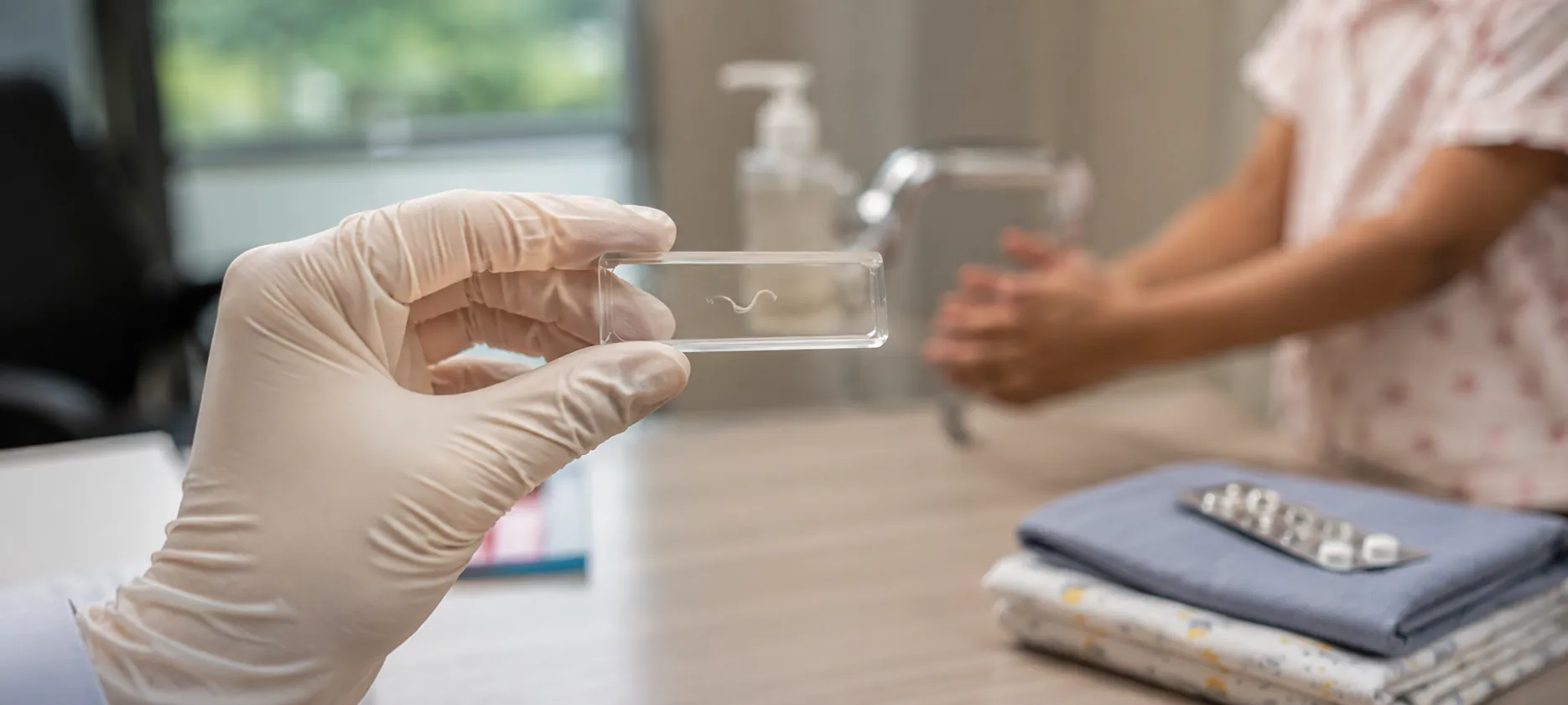
Pinworms are tiny parasitic worms that live in the intestine and rectum. They are also called Threadworms because they look like small white threads. Pinworms are common in children, but adults can get them too, especially if they live with or care for an infected child.
A pinworm infection is also called enterobiasis infection. It spreads easily when microscopic eggs are swallowed. The most common sign is itching around the anus, especially at night. This can disturb sleep and make children irritable.
The good news is that pinworms are usually easy to treat with anti-parasitic medicine and careful hygiene. Treatment works best when the whole household follows prevention steps at the same time.
What Are Pinworms?
Pinworms are small, thin, white or light grey worms. They usually measure about a few millimetres to just over one centimetre in length. They live in the lower intestine and rectum of infected people.
At night, female pinworms move to the area around the anus to lay eggs. These eggs cause irritation and itching. When you scratch, the eggs can stick to your fingers and get trapped under your nails. From there, they can spread to surfaces, food, clothes, bedding, toys, and other people.
Pinworms do not usually cause serious illness. However, they are highly contagious and can return if hygiene steps are not followed carefully.
How Do Pinworms Spread?
Pinworms spread when eggs enter your mouth and are swallowed. This can happen without you realising it because the eggs are microscopic.
The cycle usually starts when an infected person scratches the anal area. Eggs then transfer to fingers, nails, clothing, bedding, towels, bathroom surfaces, toys, or school items. Another person may touch these surfaces and then touch their mouth. Once swallowed, the eggs hatch in the intestine and grow into adult pinworms.
Pinworm eggs can survive on surfaces for days to weeks. This is why reinfection is common, especially in homes, schools, hostels, and daycare settings.
Common Causes Of Pinworm Infection
Pinworms causes are usually linked to contact with eggs from an infected person or contaminated surfaces. Common causes include:
- Poor handwashing after using the toilet
- Not washing hands before eating
- Scratching the anal area and touching objects
- Nail biting or thumb sucking
- Sharing towels, bedding, or clothing
- Contact with contaminated toys or classroom items
- Crowded living or school environments
- Not changing underwear and nightwear daily during infection
- Shaking contaminated bedding, which may spread eggs into the air
- Not treating all affected household members together
Pinworms are not a sign of poor parenting or poor hygiene alone. Even clean homes can have pinworm infection because the eggs spread very easily.
Symptoms Of Pinworms
Some people with pinworms have no symptoms. Others may notice clear signs, especially at night. Common pinworms symptoms include:
- Itching around the anus, especially at night
- Anal itching worms noticed near the anus or in underwear
- Restless sleep
- Irritability in children
- Frequent scratching of the anal area
- Redness or soreness around the anus
- Small white worms seen near the anus, in underwear, or on bedding
- Vaginal itching in girls or women if eggs spread near the vaginal area
- Mild stomach discomfort in some cases
- Reduced appetite in some children
- Tiredness due to disturbed sleep
The itching can continue for a short time even after treatment because the skin may remain irritated.
Pinworms In Children Vs Adults
Pinworms are more common in children because they often play in close contact, share toys, touch surfaces often, and may not wash their hands properly every time. Nail biting and thumb sucking also increase the risk.
Adults can get pinworms too. Parents, caregivers, teachers, and family members of infected children are at higher risk. Adults may have fewer symptoms or may only notice itching at night. If one person in the house has pinworms, other members may need treatment even if they do not have symptoms.
In children, pinworms can affect sleep, mood, attention, and comfort. In adults, symptoms may be mild, but reinfection can continue if household hygiene steps are missed.
Diagnostic Tests For Pinworms
Pinworms are often diagnosed by seeing the worm or detecting eggs. Your doctor may suggest:
- Tape test: A piece of clear tape is pressed gently on the skin around the anus in the morning before bathing or using the toilet. The tape is then checked under a microscope for eggs.
- Visual check at night: Adult pinworms may be seen near the anus 2 to 3 hours after the person sleeps.
- Underwear or bedding check: Tiny white worms may sometimes be visible on underwear, nightwear, or bedsheets.
- Nail sample check: In some cases, eggs may be found under fingernails.
- Stool test: A stool test may help assess other intestinal infections, although pinworm eggs are often better detected by the tape test than by stool testing.
- Medical examination: A doctor may check for skin irritation, infection from scratching, or other causes of itching.
How Pinworms Are Diagnosed
Pinworms are diagnosed through symptoms, examination, and testing when needed. Night time anal itching is a strong clue, especially in children. If worms are visible, this can confirm the infection.
The tape test is commonly used because pinworm eggs are laid around the anus, not usually inside the stool. It is best done early in the morning before bathing, wiping, or using the toilet. Your doctor may advise repeating the test for three mornings to improve accuracy.
You should avoid starting treatment repeatedly without diagnosis if symptoms keep returning. Other conditions, such as skin irritation, fungal infection, haemorrhoids, eczema, or other parasites, can also cause itching.
Treatment Options For Pinworms
Pinworms treatment is usually simple. The aim is to kill adult worms and stop reinfection from eggs in the environment.
Anti-Parasitic Medicine
Doctors commonly recommend medicines such as albendazole, mebendazole, or pyrantel pamoate. These medicines kill adult pinworms. The exact medicine and dose depend on age, weight, pregnancy status, medical history, and local availability.
Second Dose After Two Weeks
Most treatment plans need a second dose after about two weeks. This is important because medicines kill worms but may not kill eggs. The second dose helps kill newly hatched worms before they can lay more eggs.
Treating Household Members
Because pinworms spread easily, doctors often advise treating all household members at the same time. This helps reduce the chance of passing the infection back and forth.
Managing Itching
Warm water cleansing can soothe the area. Your doctor may suggest a mild cream if itching has caused irritation. Avoid harsh soaps and avoid scratching as much as possible.
Treating Skin Infection
If scratching has caused cuts, redness, swelling, or pus, medical treatment may be needed for a secondary skin infection.
Special Situations
Pregnant women, breastfeeding mothers, children under two years, and people with chronic illness should take treatment only after medical advice.
Home Remedies And Hygiene Tips
Home care cannot reliably kill pinworms on its own, but hygiene steps are essential along with medicine. These steps help remove eggs and prevent reinfection:
- Wash hands with soap and water after using the toilet
- Wash hands before eating or preparing food
- Keep nails short and clean
- Avoid nail biting and thumb sucking
- Shower in the morning to remove eggs from the skin
- Change underwear and nightwear daily
- Wash bedding, towels, underwear, and nightwear in hot water
- Dry washed items in sunlight or on a hot dryer setting when possible
- Do not shake bedding or clothes before washing
- Clean toilet seats, bathroom surfaces, door handles, and toys
- Vacuum floors and soft furnishings regularly
- Wear close fitting underwear at night to reduce scratching
- Avoid sharing towels until the infection clears
Prevention Tips To Avoid Pinworm Infection
Pinworms can return if eggs remain in the environment. You can reduce risk with these habits:
- Teach children proper handwashing
- Make handwashing routine after toilet use and before meals
- Keep children's nails trimmed
- Discourage scratching around the anal area
- Change and wash underwear daily
- Wash bedding regularly
- Clean shared surfaces often
- Avoid sharing towels
- Ensure children bathe or shower daily
- Treat all infected household members as advised
- Follow the second medicine dose as prescribed
- Inform caregivers or school health staff if reinfection keeps occurring
Prevention needs consistency. Hygiene steps are most important during the first few weeks after treatment.
Complications Of Untreated Infection
Pinworms usually do not cause serious health problems. Still, untreated or repeated infection can lead to:
- Ongoing night time itching
- Poor sleep
- Irritability and tiredness
- Reduced concentration in children
- Skin redness and soreness from scratching
- Bacterial skin infection
- Vaginal itching or irritation in girls and women
- Rare urinary tract irritation
- Reinfection within the household
- Anxiety or embarrassment due to symptoms
Early treatment and hygiene can prevent most complications.
When To See A Doctor
See a doctor if you or your child has severe anal itching, visible worms, disturbed sleep, repeated infection, or itching that does not improve after treatment. You should also seek medical advice if there is redness, swelling, bleeding, pus, fever, abdominal pain, weight loss, or vaginal symptoms.
You should speak to a doctor before giving medicine to a child under two years, a pregnant woman, or anyone with a chronic medical condition. If symptoms keep returning, a proper diagnosis can help rule out other causes.
Key Takeaways
- Pinworms are tiny white intestinal worms also called Threadworms.
- Pinworm infection is highly contagious but usually easy to treat.
- The most common symptom is itching around the anus at night.
- Pinworms spread when microscopic eggs are swallowed.
- Children are more commonly affected, but adults can get infected too.
- Diagnosis may involve a tape test or seeing worms near the anus.
- Pinworms treatment usually needs medicine and a second dose after two weeks.
- Household members may need treatment at the same time.
- Hygiene is essential to prevent reinfection.
- Washing hands, trimming nails, and washing bedding in hot water can help stop spread.
Conclusion
Pinworms can feel uncomfortable and worrying, especially when they affect children. However, they are common, treatable, and rarely serious. The key is timely treatment, a repeat dose when advised, and strict hygiene to prevent reinfection.
If symptoms keep returning or you are unsure about the cause of anal itching, diagnostic support can help. Metropolis Healthcare offers reliable testing options, including stool test support for digestive health concerns and preventive full body checkup packages for overall wellness monitoring. With 4,000 tests, expert pathologists, accurate reports, quick turnaround time, home sample collection, and easy booking through website, call, app, and WhatsApp, Metropolis helps you manage your health with confidence and convenience.
FAQs About Pinworms
How Do I Check Myself For Pinworms?
You can check for pinworms at night, about 2 to 3 hours after sleep, by looking around the anal area with a light. You may see tiny white thread like worms. You can also do a tape test in the morning before bathing or using the toilet. Press clear tape gently to the skin around the anus and take it to your doctor for microscopic checking.
Do Pinworms In Humans Go Away?
Pinworms usually do not go away reliably without treatment. Adult worms may die, but eggs can hatch and restart the cycle. Medicine and hygiene steps are needed to clear the infection and reduce reinfection risk.
Can Pinworms Live In Pillows?
Pinworm eggs can contaminate pillows, bedsheets, towels, underwear, and clothing. The worms themselves live in the intestine, but eggs can remain on surfaces for some time. Wash bedding in hot water and avoid shaking sheets before washing.
Are Pinworms Common In Children?
Yes, pinworms are very common in children, especially school aged children. This is because children often play closely, share objects, touch surfaces, and may put fingers in their mouth. With treatment and good hygiene, the infection can be controlled.
Are Pinworms Contagious?
Yes, pinworms are highly contagious. They spread when eggs from an infected person are swallowed through contaminated hands, food, bedding, towels, toys, or surfaces. Treating the household and following hygiene steps can help stop the spread.