

 App Store
 Google Play




A sudden heart emergency can happen without warning. In such moments, every second matters. A defibrillator can help save a life by giving the heart a controlled electric shock when certain dangerous heart rhythms occur.
Defibrillators are used during sudden cardiac arrest. This is when the heart suddenly stops pumping blood effectively. Quick CPR and timely defibrillator use can improve the chance of survival until emergency medical care arrives.
You may have seen a defibrillator machine in airports, malls, offices, hospitals, gyms, or ambulances. Some people at high risk of dangerous heart rhythms may also have an implanted defibrillator.
What Is A Defibrillator?
A defibrillator is a medical device that sends an electric shock to the heart. This shock can help reset certain abnormal heart rhythms and allow the heart's natural electrical system to regain control.
The main rhythms treated by defibrillation are ventricular fibrillation and pulseless ventricular tachycardia. In these rhythms, the lower chambers of the heart beat chaotically or too fast to pump blood properly.
A defibrillator does not treat every type of heart rhythm problem. It is used only when the rhythm is shockable. Modern devices can analyse the rhythm and advise whether a shock is needed.
How Does A Defibrillator Work?
The heart has an electrical system that controls each heartbeat. During sudden cardiac arrest, this system may become chaotic. Instead of pumping blood, the heart may quiver or beat in an ineffective way.
A defibrillator works by sending a brief electric current through the chest and heart. This shock pauses the chaotic electrical activity for a moment. This may allow the heart to restart a more organised rhythm.
In an emergency, CPR helps keep blood moving to the brain and vital organs. The defibrillator targets the abnormal rhythm itself. Both are important. CPR should continue until the device is ready and emergency responders take over.
Types Of Defibrillators
Different types of defibrillators are used in different settings.
- AED: A portable device found in public places. It gives voice and visual instructions and is designed for use by trained or untrained bystanders.
- Manual External Defibrillator: Used by doctors, nurses, paramedics, and trained medical teams. The healthcare provider decides the energy level and timing of shock.
- Implantable Cardioverter Defibrillator: A device placed inside the chest for people at high risk of life-threatening rhythm problems.
- Wearable Cardioverter Defibrillator: A vest-like device worn under clothing for short-term protection in selected high-risk patients.
- Biphasic Defibrillator: A commonly used modern device that sends current in two directions and can work effectively at lower energy than older monophasic devices.
- Monophasic Defibrillator: An older type that sends current in one direction. These are less commonly used today.
Your doctor decides which type is needed based on the person's risk, diagnosis, and clinical situation.
Automated External Defibrillator (AED)
An Automated External Defibrillator is a portable device used during suspected sudden cardiac arrest. It checks the heart rhythm and tells the rescuer what to do next.
Once turned on, the AED gives step-by-step voice prompts. It tells you where to place the pads, when to stand clear, and whether a shock is advised. The device will not deliver a shock unless it detects a shockable rhythm.
An AED is designed to be simple. Even if you are nervous, follow the device instructions. Call emergency medical services first or ask someone nearby to call while you start CPR.
Defibrillator Machine Use
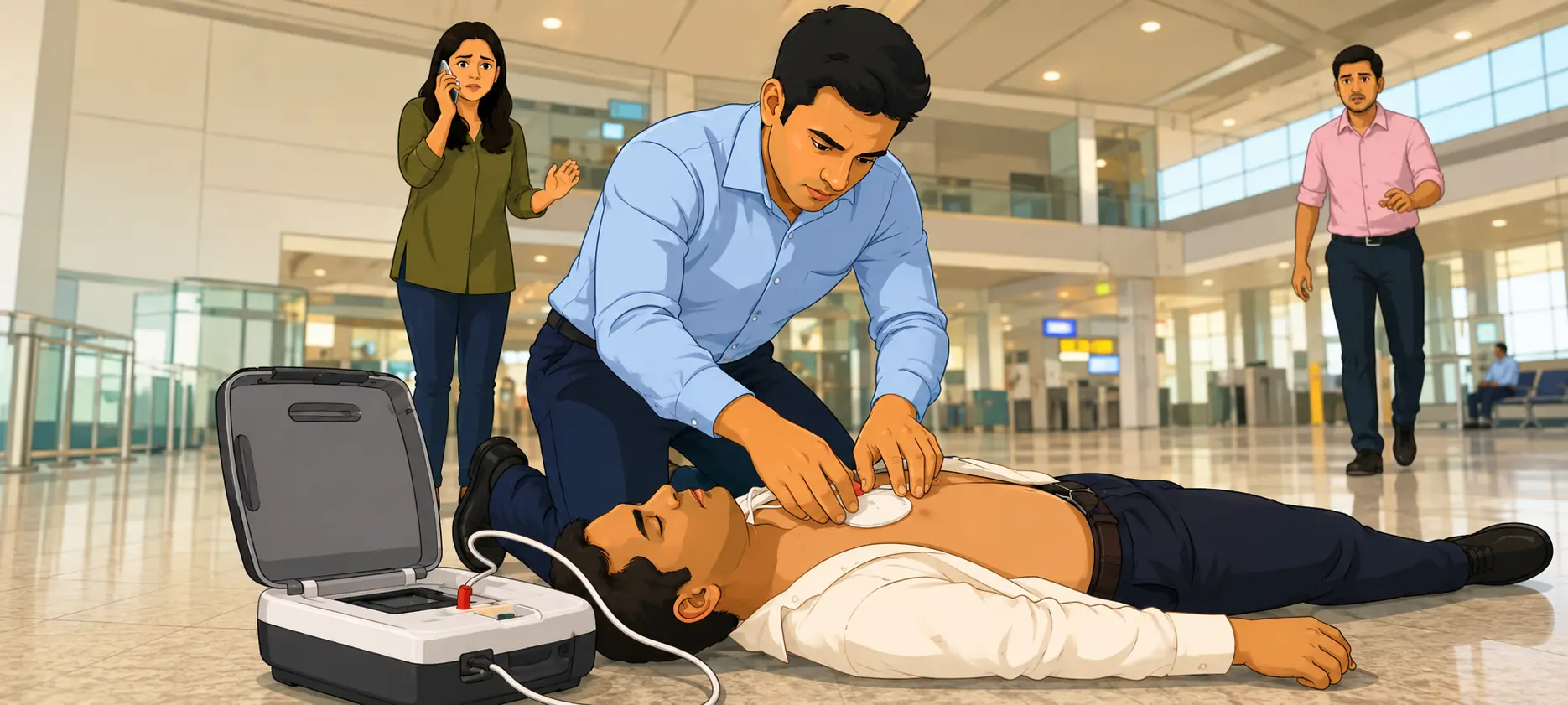
Defibrillator machine use is most important when a person collapses, is unresponsive, and is not breathing normally. In this situation, you should treat it as a medical emergency.
If you see someone collapse:
- Check if the area is safe.
- Tap the person and shout to see if they respond.
- Call emergency medical services immediately.
- Ask someone to bring a defibrillator machine.
- Start CPR if the person is not breathing normally.
- Turn on the defibrillator and follow its prompts.
- Make sure no one touches the person during rhythm analysis or shock delivery.
Do not delay CPR while waiting for the device. If others are present, one person should perform CPR while another gets the device.
Defibrillator Pad Placement
Correct defibrillator pad placement helps the shock pass through the heart effectively.
For adults, common pad placement is:
- Place one pad on the upper right side of the bare chest, below the collarbone.
- Place the second pad on the lower left side of the chest, below the armpit.
- Make sure the chest is dry before placing the pads.
- Remove medication patches if they are in the way and wipe the area.
- Avoid placing pads directly over implanted devices.
- Do not let pads touch each other.
- Follow the diagram shown on the pads or device.
For small children, pads may be placed one on the chest and one on the back if the pads could touch on the chest. Use paediatric pads if available.
Defibrillator Procedure
A typical emergency defibrillator procedure follows these steps:
Check Response
See if the person responds to your voice or touch.
Call For Help
Call emergency medical services or ask someone nearby to call.
Start CPR
Begin chest compressions if the person is not breathing normally.
Turn On The Device
Open or switch on the device and follow the voice prompts.
Expose And Prepare The Chest
Remove clothing from the chest. Wipe the chest dry if needed.
Apply Pads
Place the pads exactly as shown in the device diagram.
Let The Device Analyse
Make sure no one touches the person while the device checks the heart rhythm.
Deliver Shock If Advised
Stand clear. Press the shock button if the device tells you to. Some devices deliver the shock automatically.
Resume CPR
Start CPR again immediately after the shock, unless the person wakes up or starts breathing normally.
Continue Until Help Arrives
Keep following the prompts until emergency responders take over.
Biphasic Vs. Monophasic Defibrillators
A biphasic defibrillator sends current in two directions through the heart. A monophasic defibrillator sends current in one direction.
Most modern external defibrillators are biphasic. They can often deliver effective shocks at lower energy levels than older monophasic devices. This may reduce skin injury and improve shock success.
A monophasic device can still be used if it is the only device available. In an emergency, the best defibrillator is the one that can be used quickly and correctly.
Risks And Side Effects Of Defibrillators
A defibrillator can be lifesaving, but some side effects and risks may occur.
External shocks can cause temporary skin redness, soreness, minor burns, or bruising where pads touch the chest. CPR given during cardiac arrest can also cause rib pain or rib fractures, but it may still be necessary to save life.
Implantable defibrillator procedures have additional risks. These may include infection, swelling, bleeding, bruising, blood vessel damage, lead movement, collapsed lung, or rarely damage to the heart. Pneumothorax is one possible complication after implantable device placement, and your care team will monitor for it.
A defibrillator should not be used casually. It should be used when sudden cardiac arrest is suspected. An AED reduces risk because it checks the heart rhythm and shocks only when needed.
Benefits Of Using A Defibrillator
A defibrillator can restore a shockable rhythm during sudden cardiac arrest. Early defibrillation, along with CPR, can improve survival.
Key benefits include:
- It treats life-threatening ventricular rhythms.
- It can be used quickly in public places.
- It gives clear instructions to the rescuer.
- It can be used before an ambulance arrives.
- It supports the chain of survival.
- It can reduce the time to shock.
- It may help prevent sudden cardiac death in high-risk patients with an implanted device.
Fast action is critical. The sooner CPR and defibrillation begin, the better the chance of survival and recovery.
Tests After Defibrillator Use
After successful emergency defibrillator use, doctors will investigate why the heart emergency happened. Tests may include:
- ECG to check electrical activity of the heart
- Blood tests for cardiac enzymes
- Electrolyte tests
- Kidney function tests
- Blood sugar test
- Complete blood count
- Thyroid function test, if rhythm problems are suspected
- Chest X-ray
- Echocardiogram
- Coronary angiography, if a blocked artery is suspected
- Holter monitoring or rhythm monitoring
- Cardiac MRI in selected cases
- CT scan if stroke, clot, or other complications are suspected
- Device check if the person has an implanted defibrillator
These tests help identify heart attack, electrolyte imbalance, inherited rhythm conditions, structural heart disease, medicine effects, or other causes.
Conclusion
A defibrillator can make the difference between life and death during sudden cardiac arrest. It works by correcting certain dangerous heart rhythms through a controlled electric shock. Quick CPR, correct defibrillator pad placement, and timely emergency care are all important.
If you or someone in your family has a history of fainting, rhythm problems, heart attack, chest pain, or high heart risk, speak to a doctor about evaluation and prevention. Regular health checks can help detect risk factors such as diabetes, high cholesterol, kidney problems, and electrolyte imbalance.
Metropolis Healthcare supports preventive and ongoing health monitoring with 4,000+ tests, full body checkups, speciality testing, home sample collection, quick turnaround time, and accurate reports through NABL and CAP accredited laboratories. With easy booking through the website, call, app, and WhatsApp, and a strong network of 10,000 touchpoints, Metropolis can help you stay informed about key health markers and take proactive steps for long-term wellness.
FAQ
How Does A Defibrillator Save Lives?
A defibrillator saves lives by treating dangerous shockable rhythms that stop the heart from pumping blood properly. The shock can reset the heart's electrical activity and allow a more organised rhythm to return. CPR helps maintain blood flow while the device is being prepared.
Can A Defibrillator Restart A Heart?
A defibrillator does not restart every stopped heart. It works for specific shockable rhythms such as ventricular fibrillation and pulseless ventricular tachycardia. It does not usually help in asystole, often called a flatline. The device analyses the rhythm and advises a shock only when appropriate.
Is It Safe To Use A Defibrillator At Home?
It can be safe to use an Automated External Defibrillator at home if someone in the household is at high risk and the doctor has advised it. The device should be maintained, checked regularly, and kept where family members can access it quickly. CPR and AED training are strongly recommended.
When Should A Defibrillator Be Used?
Use a defibrillator when a person is unresponsive and not breathing normally. Call emergency medical services, start CPR, and use the device as soon as it is available. The device will analyse the rhythm and decide whether a shock is needed.
Can Defibrillators Be Used On Children?
Yes, defibrillators can be used on children in cardiac arrest. Use paediatric pads or a child setting if available. If not available, adult pads may be used, but they must not touch each other. For small children, one pad may be placed on the chest and the other on the back.