



 App Store
 Google Play

View your reports and upcoming health checkups at one place.

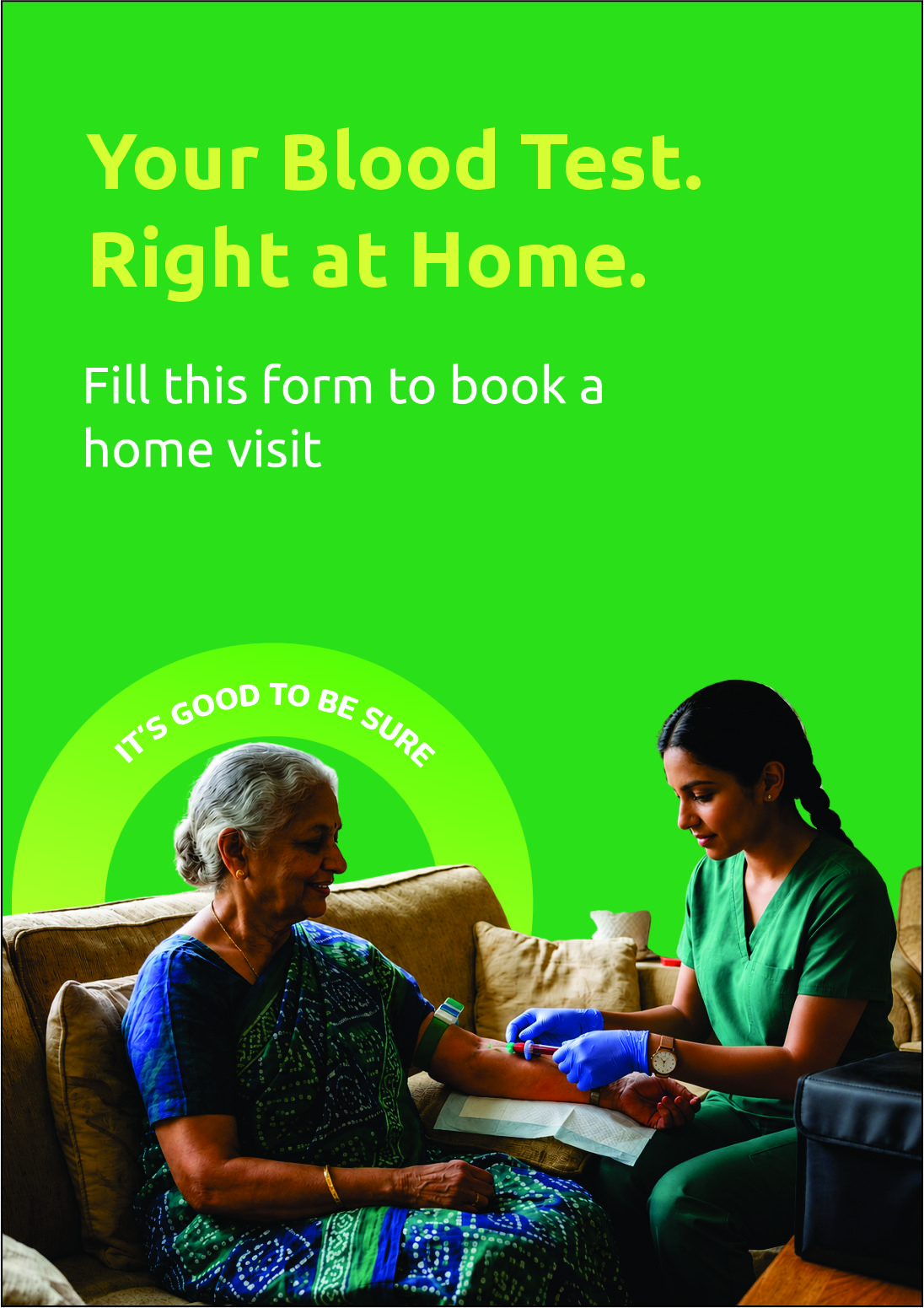
Please share your details, our health advisor will call you or you can call us at 080-4891-1400.
 Upload Prescription
Not sure which tests to take? Share your prescription with us and our team will call you.

 Mumbai
 Pune
Pune
 Bangalore
 Surat
Surat
 Delhi
Delhi
 Chennai
D-Dimer Test
Also Known As : D-Dimer Quantitative, Citrated Plasma


MORE WAYS TO BOOK
Brief Details
What Is a D-Dimer Test?
The D-dimer test measures the amount of a protein fragment called D-dimer in your blood. This fragment is produced when a blood clot dissolves naturally in your body. A venous blood sample is collected into a 3.2 % sodium-citrate tube for analysis. The D-dimer test helps doctors detect blood clotting disorders and rule out serious conditions, like deep vein thrombosis (DVT) and pulmonary embolism (PE).
What Does the D-Dimer Test Measure?
The D-dimer test measures specific protein fragments that indicate your body's clotting activity:
- D-dimer protein levels: These fragments are released when blood clots break down naturally.
- Blood clot formation and breakdown: Higher levels suggest active clot formation and dissolution.
- Coagulation system activity: The test shows how actively your blood clotting system is working.
- Thrombotic risk assessment: Results help evaluate your risk of developing dangerous blood clots.
D-Dimer Test: Who Needs It and Why It's Done
What Symptoms May Call for a D-Dimer Test?
Your doctor may recommend this test if you experience symptoms that suggest blood-clotting problems:
- Sudden shortness of breath or difficulty breathing
- Sharp chest pain that worsens when you breathe deeply or cough.
- Leg swelling, pain, or tenderness (especially in one leg)
- Skin warmth or redness in the affected leg.
- Rapid heartbeat or feeling dizzy
- Coughing, sometimes producing blood-streaked mucus
Who Should Get a D-Dimer Test?
The test is recommended for specific groups of people based on their symptoms and risk factors:
- Patients with acute symptoms suggesting DVT or pulmonary embolism.
- High-risk individuals who have recently had major surgery or experienced trauma.
- People with medical conditions that increase clotting risk, such as cancer or heart disease.
- Critically ill patients who require monitoring for coagulation disorders.
- COVID-19 patients who may develop thrombotic complications.
Why Is a D-Dimer Test Done?
The D-dimer test serves as a valuable "rule-out" tool that helps doctors quickly determine if dangerous blood clots are causing your symptoms, guiding further diagnostic decisions.
Importance of a D-Dimer Test
The D-dimer test plays a crucial role in emergency medicine and critical care. Its high negative predictive value means a normal result can confidently rule out major blood clots, helping doctors avoid unnecessary invasive procedures. When elevated, the test alerts healthcare providers to investigate further with imaging studies, like ultrasounds or CT scans.
This timely detection can be life-saving, as conditions like pulmonary embolism require immediate treatment. The test also helps monitor patients with known clotting disorders and guides treatment decisions in critically ill patients.
D-Dimer Test Booking & Reports – Metropolis Healthcare India
How to Book a D-Dimer Test?
- Simple Online Booking
You can book the test through the Metropolis Healthcare App or website. Select 'D-Dimer Test', choose a convenient time slot, and provide your address for a blood test at home. You can also visit the nearest Metropolis Lab if you prefer to give the sample directly at the lab. - Safe Home Sample Collection
Our trained phlebotomists ensure the timely collection of your sample while strictly following all safety and hygiene protocols. - Sample Tracking Updates
Stay informed at every step. From collection to testing, you can track your sample directly through the Metropolis Healthcare website. - Accurate Laboratory Testing
Your sample is processed at our NABL- & CAP-accredited laboratories, where expert technicians ensure accurate results. - Quick & Easy Reports
Receive your test reports promptly via email, WhatsApp, or by downloading them directly from the Metropolis Healthcare website or app.
Is Home Sample Collection for the D-Dimer Test Available Near You?
Yes, home sample collection for the D-dimer test is widely available across India through Metropolis Healthcare. Our trained phlebotomists visit your home at your preferred time, following strict safety protocols to collect your blood sample. This service eliminates the need to travel to a lab, making it especially helpful when you're experiencing symptoms or have mobility concerns.
How Long Does It Take to Get a D-Dimer Test Report?
Reports are usually available within 4–6 hours after the sample reaches the lab
Where Can I See or Get the D-Dimer Test Results?
Test results from Metropolis Healthcare can be accessed through multiple convenient channels. You can log in to the Metropolis website using your credentials or use the Metropolis Healthcare App to view and download your reports. Additionally, test reports are sent via email or WhatsApp, and you also have the option to collect a physical copy directly from the lab.
Interpreting D-Dimer Test Results
What Your D-Dimer Test Results May Indicate
The table below shows the reference range and what different D-dimer levels might mean for your health:
|
Parameter |
Normal Range |
High Values May Indicate |
Low Values May Indicate |
|
D-Dimer Quantitative |
< 0.5 μg/mL (FEU) – Fibrinogen Equivalent Units |
Blood clots (DVT / PE), recent surgery or trauma, infection, DIC, pregnancy, liver disease, malignancy, or inflammatory conditions |
No evidence of significant clot formation; low likelihood of thromboembolic disease |
Conditions That May Affect D-Dimer Test Accuracy
Several factors can influence your D-dimer test results and should be discussed with your doctor:
- Age-related changes: D-dimer levels naturally increase with age, potentially causing false positives in elderly patients.
- Pregnancy and medical conditions: Pregnancy, liver disease, heart disease, and rheumatoid arthritis can elevate levels.
- Recent medical procedures: Surgery, trauma, or infections can increase D-dimer production.
- Blood sample quality: Haemolysed, lipemic, or clotted samples may affect accuracy.
- Medications: Blood thinners and certain other medications can influence results.
- Underlying diseases: Cancer, obesity, and high triglyceride levels may cause elevated readings.
How Is a D-Dimer Test Done?
The D-dimer test follows a standard blood collection procedure performed by trained healthcare professionals:
- Preparation: The healthcare provider cleans the area on your arm with an antiseptic.
- Vein identification: An elastic band is tied around your upper arm to make veins more visible.
- Sample collection: About 3 mL of venous blood is drawn into a 3.2 % sodium-citrate vacutainer.
- Post-collection care: The needle is removed, and pressure is applied to prevent bleeding.
- Laboratory processing: The plasma sample is analysed using a particle-enhanced immunoturbidimetric assay to quantify D-dimer levels.
How Should You Prepare for a D-Dimer Test?
Preparing for your D-dimer test is straightforward and requires minimal preparation:
- No fasting required: You can eat and drink normally before the test.
- Medication information: Inform your doctor about all medications, especially blood thinners.
- Medical history: Provide a complete clinical history as requested by your healthcare provider.
- Stay hydrated: Drink adequate water to help with blood sample collection.
- Comfortable clothing: Wear clothing that allows easy access to your arm for a blood draw.
Diseases that a D-Dimer Test Can Help Detect
The D-dimer test assists in diagnosing and monitoring several serious medical conditions:
- Deep Vein Thrombosis (DVT): Blood clots in deep veins, usually in the legs.
- Pulmonary Embolism (PE): Blood clots that travel to the lungs.
- Disseminated Intravascular Coagulation (DIC): A condition involving widespread abnormal blood clotting throughout the body.
- Thrombotic complications in COVID-19: Blood clotting issues related to coronavirus infection
- Post-surgical complications: Clot formation after major surgery or immobilisation
- Coagulopathy monitoring: Various blood-clotting disorders require ongoing assessment.
D-Dimer Test/Packages that You Can Book With Metropolis Healthcare
Here are the D-dimer-related tests and comprehensive packages available to meet your diagnostic needs:
|
Test/Package Name |
Purpose/Highlights |
|
Detects blood clotting disorders, rules out DVT and PE |
|
|
Comprehensive assessment of blood clotting function, including CBC, bleeding time, clotting time, PT, PTT, fibrinogen, and D-dimer. |
|
|
An initial monitoring package for COVID-19 complications, like blood clotting issues. |
D-Dimer Test Prices in Different Cities
The cost of a D-dimer test may vary depending on your location. Here's a table showing the approximate prices in different cities.
|
City |
Approximate Cost (INR) |
|
₹1250 - ₹1800 |
|
|
₹1250 - ₹1800 |
|
|
₹1250 - ₹1800 |
|
|
₹1250 - ₹1800 |
|
|
₹1250 - ₹1800 |
|
|
₹1250 - ₹1800 |
Reference
Kabrhel C, Mark Courtney D, Camargo CA Jr, Plewa MC, Nordenholz KE, Moore CL, Richman PB, Smithline HA, Beam DM, Kline JA. Factors associated with positive D-dimer results in patients evaluated for pulmonary embolism. Acad Emerg Med. 2010 Jun;17(6):589-97
Frequently asked questions
Find quick answers to the most common questions about health tests, bookings, and reports.
D Dimer test must be taken to rule out clotting (thrombotic) episodes and to help diagnose conditions linked to thrombosis.
D-dimer testing is often recommended when someone shows symptoms of a serious condition like chest pain and breathing difficulty.
It is also ordered when someone has symptoms of deep vein thrombosis, such as:
- Leg pain or tenderness, mainly in one leg
- Leg swelling
- Discoloration of the leg
Or symptoms of pulmonary embolism such as:
- Sudden shortness of breath, laboured breathing
- Coughing, haemoptysis (presence of blood in sputum)
- Lung-related chest pain
- Rapid heart rate
When a blood vessel or tissue is injured and starts to bleed, a process called haemostasis is started by the body to create a blood clot to restrict and eventually stop the bleeding. This process produces fibrin threads which is a protein which links with the haemostasis to form a fibrin net. That net along with the platelets, helps hold the creation blood clot in place at the injury until the wound is healed.
Once the injury is healed and a clot is no longer needed, the body uses plasmin, an enzyme to break the thrombus (clot) into small pieces so that it can be removed. The pieces of the disintegrating fibrin in the clot are called fibrin degradation products (FDP), which consist of variously sized pieces of crosslinked fibrin. One of the final fibrin degradation products produced is D-dimer. The level of D-dimer in the blood can significantly rise when there is a critical formation and breakdown of fibrin clots in the body.
For a person who is at low or intermediate risk for blood clotting and/or thrombotic embolism, the strength of the D-dimer can help determine the strength of the fibrin and if needed, the person can be hospitalised.
This test is useful in the diagnosis of Disseminated intravascular coagulation and fibrinolysis (DIC), Deep Vein Thrombosis (DVT) & pulmonary embolism (PE) and also in stroke.
Why Metropolis Healthcare?
Metropolis brings 45 years of diagnostics excellence, rooted in science and trust.
With expertise across routine, specialised and super-specialised diagnostics, Metropolis combines scientific excellence, advanced technology and rigorous quality standards to deliver reliable diagnostic solutions across areas such as oncology, neurology, nephrology, women and child health, molecular diagnostics, genomics and more.
NABL & CAP
Accredited labs

210+
Clinical Labs

750+ Towns
Pan India Presence

2,000+
Scientific Team Members

4,500+
Test & Profiles
Latest Blogs & News
Stay informed with our expert insights and updates.





About Us
Metropolis Healthcare is one of India’s leading diagnostics companies, with 45 years of experience built on scientific expertise, quality and trust. We serve millions of patients through a growing network supported by advanced laboratory infrastructure, technology and a patient-first approach. Our comprehensive portfolio includes 4,500+ tests and profiles across routine, specialised and super-specialised diagnostics, spanning pathology, molecular diagnostics, genomics, cytogenetics, oncology, neurology, nephrology, women and child health, preventive healthcare and wellness.
With 210+ clinical laboratories and a service network of 5,000+ touchpoints reaching more than 750 towns in India, we are focused on making trusted diagnostic services more accessible while maintaining rigorous quality standards. By combining scientific excellence, advanced technology and human expertise, we deliver accurate, reliable and relevant diagnostic insights that support better-informed healthcare decisions.
View your reports and upcoming health checkups at one place.
Please share your details, our health advisor will call you or you can call us at 080-4891-1400.
Upload Prescription
Not sure which tests to take? Share your prescription with us and our team will call you.
Need help in booking tests?
Please share your details, our health advisor will call you or you can call us at 080-4891-1400.