

 App Store
 Google Play







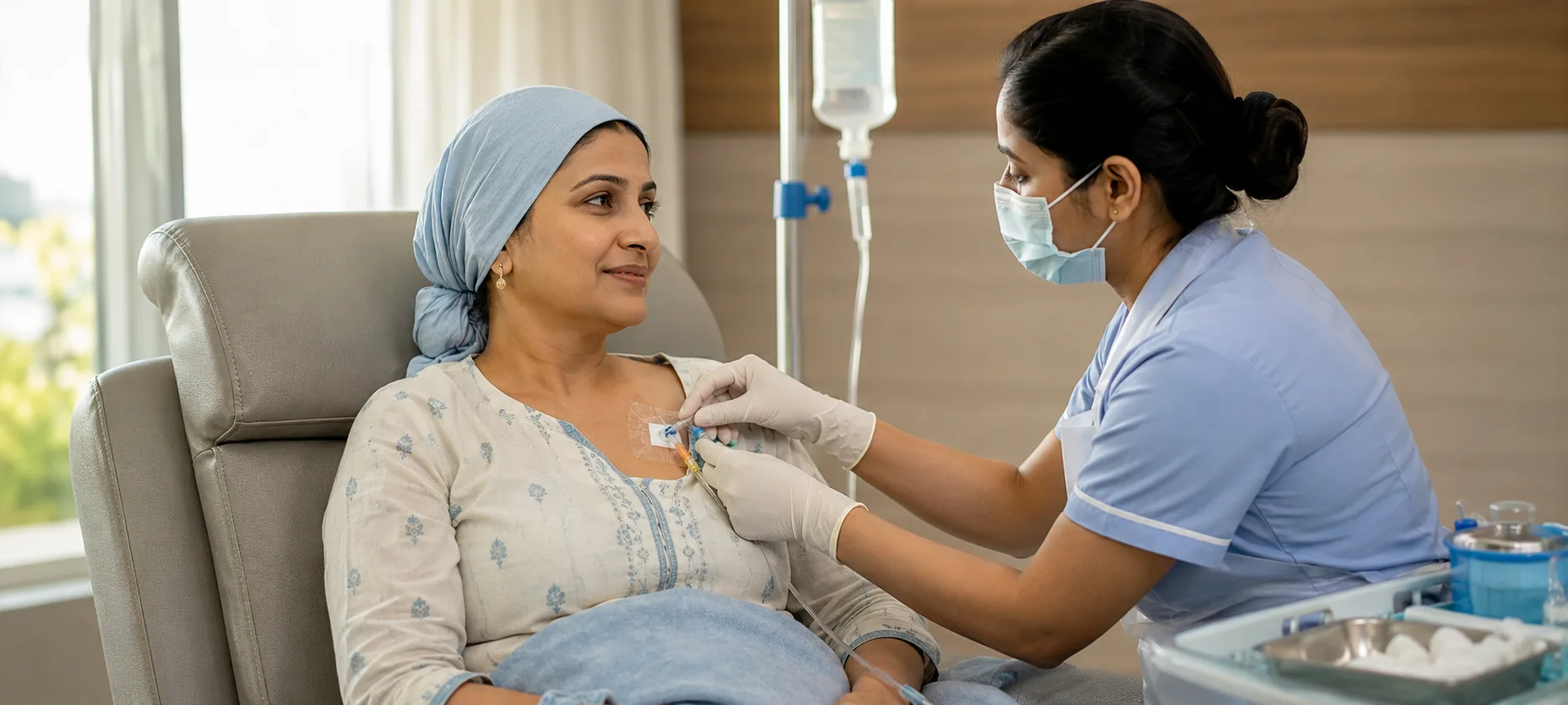
A chemo port is a small medical device placed under your skin to make cancer treatment easier, safer, and more comfortable. If you or your loved one has been advised to get a chemo port, it is normal to feel unsure at first. The idea of a device under the skin can sound worrying, but a chemo port is commonly used during cancer care to reduce repeated needle pricks and protect smaller veins.
A chemotherapy port may be used for medicines, chemotherapy, blood tests, fluids, blood transfusions, or contrast dye for scans. It can be helpful for people receiving treatment for breast cancer, ovarian cancer, leukaemia, lung cancer, and many other cancers that need repeated intravenous access.
What Is A Chemo Port?
A chemo port is a small, implantable device that connects to a large vein through a thin tube called a catheter. It is usually placed under the skin in the upper chest, though some ports may be placed in the arm or abdomen.
The chemo port has a small chamber, often called a reservoir, with a soft centre called a septum. During treatment, a trained nurse inserts a special needle through the skin into the port. Medicines or fluids then pass through the catheter into a large vein.
A chemo port is also called a chemotherapy port, implanted port, port-a-cath, or central venous port.
How Does A Chemo Port Work?
A chemo port gives your healthcare team direct access to a large vein. This matters because chemotherapy medicines can sometimes irritate smaller veins in the hand or arm.
When the chemo port is accessed, medicine enters the port, moves through the catheter, and reaches the bloodstream through a large vein. Since the medicine is diluted quickly in a larger blood vessel, it can reduce irritation and tissue damage compared with repeated peripheral IV lines.
A chemo port can also be used to draw blood samples, give fluids, provide supportive medicines, or deliver treatments over several hours or days.
Chemo Port Insertion: The Procedure
Chemoport insertion is usually a minor surgical procedure. It may be done by a surgeon or interventional radiologist.
- You may receive local anaesthesia with sedation or general anaesthesia, depending on your case.
- The doctor cleans the skin and makes a small incision, usually near the upper chest.
- A catheter is guided into a large vein, often using imaging support.
- The port chamber is placed under the skin.
- The catheter is connected to the port.
- The incision is closed with stitches, skin glue, or dressing.
- A chest X-ray or imaging check may be done to confirm the position.
Most people can go home the same day, unless their doctor advises observation.
Your care team will explain when the chemo port can be used. In many cases, treatment can begin soon after placement, depending on the healing status and medical plan.
Why Is A Chemo Port Essential For Cancer Treatment?
A chemo port is not needed for every person receiving cancer treatment. However, it can be very useful when you need repeated chemotherapy, long treatment cycles, difficult vein access, or medicines that are harsh on smaller veins.
A chemo port reduces repeated needle pricks in the arms. It helps protect veins from irritation. It can lower the chance of chemotherapy leaking into surrounding tissues through a small IV line. It also makes repeated treatment sessions more organised for you and your care team.
For people undergoing treatment for breast cancer, ovarian cancer, leukaemia, lung cancer, or other cancers, a chemo port can make repeated visits more manageable.
Chemo Port Side Effects
Chemo port side effects are usually mild, but complications can happen. Tell your doctor if you notice unusual symptoms.
Possible chemo port side effects include:
- Mild pain or soreness after insertion
- Bruising around the port site
- Swelling near the incision
- Infection
- Blood clots
- Catheter blockage
- Port movement or displacement
- Skin irritation
- Bleeding
- Scar formation
- Rare catheter fracture or mechanical damage
Seek medical advice if you have fever, redness, warmth, pus, severe pain, swelling, chest discomfort, shortness of breath, or difficulty flushing the port.
How To Sleep With A Chemo Port
Sleeping may feel uncomfortable for a few days after chemoport insertion. These tips may help:
- Sleep on your back during early recovery.
- Avoid sleeping on your stomach.
- If your chemo port is on the right side, try sleeping on your left side.
- If your chemo port is on the left side, try sleeping on your right side.
- Use pillows to support your upper body.
- Avoid pressure directly over the chemo port.
- Avoid raising your arms above your head for long periods if it causes discomfort.
- Follow your doctor's advice if you have pain, swelling, or dressing in place.
Once the area heals, most people sleep normally with a chemo port.
Chemo Port Price
Chemo port price can vary based on the hospital or centre, city, type of port, doctor's fee, anaesthesia, imaging support, procedure charges, and whether any hospital stay is needed.
The chemo port price may also differ depending on whether a single lumen or double lumen port is used. Your oncology team or hospital billing desk can give you the most accurate estimate. Do not choose a port only by cost. Safety, sterility, device quality, and experienced placement are important.
Chemotherapy Port: Care And Maintenance
A chemotherapy port needs proper care to work well and reduce complications.
- Keep the dressing dry after insertion, as advised.
- Do not touch the incision with unwashed hands.
- Attend all scheduled follow ups.
- Ask how often your chemo port needs flushing.
- Report pain, redness, swelling, fever, or discharge.
- Avoid heavy lifting until your doctor allows it.
- Do not allow anyone untrained to access the port.
- Keep the port card or device details safely.
- Ask your team before swimming or bathing.
- Follow all instructions before scans or blood tests.
How To Maintain Hygiene With A Chemo Port
Good hygiene lowers the risk of infection. Always wash your hands before touching the area around the chemo port. Keep the skin clean and dry while the incision heals. Do not apply creams, powders, oils, or home remedies near the port unless your doctor says it is safe.
During treatment visits, your nurse will clean the skin with antiseptic before accessing the chemo port. This sterile technique is important to reduce infection risk.
What Tests To Take Before And After Chemo Port Surgery?
Your doctor may advise tests based on your cancer type, treatment plan, and general health.
Before chemoport insertion, tests may include:
- Complete blood count
- Platelet count
- Coagulation profile
- Kidney function test
- Liver function test
- Blood sugar test
- Viral markers, if required
- ECG, if needed
- Chest imaging, if advised
After chemoport insertion, tests may include:
- Chest X-ray or imaging to confirm position
- Blood tests before chemotherapy cycles
- Infection markers if fever occurs
- Blood culture if port infection is suspected
- Doppler or imaging if blood clots are suspected
- Routine tests to monitor treatment safety
Metropolis Healthcare offers a wide range of blood tests, cancer care related diagnostics, wellness tests, and home sample collection for eligible tests, helping you monitor important health markers during treatment and recovery.
Chemo Port Care Instructions Post-Surgery
Keep The Dressing Dry
Follow your doctor's instructions on bathing and dressing care.
Check The Site Daily
Look for redness, swelling, pain, bleeding, or discharge.
Avoid Heavy Activity
Do not lift heavy objects or do strenuous exercise until cleared.
Take Medicines As Prescribed
Use pain medicines or antibiotics only as advised.
Do Not Scratch The Area
Avoid touching, pressing, or scratching the incision.
Attend Follow Up Visits
Your doctor will check healing and port function.
Report Warning Signs Early
Call your doctor if you have fever, pus, severe pain, or swelling.
What Happens If A Chemo Port Gets Infected?
If a chemo port gets infected, you may develop fever, chills, redness, warmth, pain, swelling, or discharge near the port. Sometimes, infection can spread into the bloodstream and cause serious illness.
Your doctor may advise blood tests, blood cultures, antibiotics, or port evaluation. In some cases, the chemo port may need to be removed and replaced later. Early treatment helps prevent complications.
Chemo Port Removal: When Is It Needed?
Chemo port removal is done when the port is no longer needed, when treatment is complete, or if there is a complication such as infection, blockage, blood clots, fracture, or mechanical failure.
Removal is usually a short procedure. The doctor makes a small incision over the chemo port, removes the device and catheter, and closes the skin. Mild pain, swelling, or bruising may happen for a few days.
Chemotherapy Port And Its Impact On Daily Life
A chemotherapy port can make repeated cancer treatment sessions easier. Once the incision heals, the chemo port stays completely under the skin. You can usually wear regular clothes, move around, and do most routine activities.
Your doctor may allow showering, bathing, or swimming after the site has healed. You may need to avoid rough sports, heavy lifting, or direct pressure over the port. With proper care, a chemo port can stay in place for weeks, months, or even years.
Conclusion
A chemo port can make cancer treatment more comfortable by reducing repeated needle pricks and giving your care team reliable access to your bloodstream. It can be especially helpful during repeated chemotherapy, supportive medicines, fluids, blood tests, and long treatment plans.
Along with treatment, regular diagnostic monitoring helps you and your doctor track your health during cancer care. Metropolis Healthcare supports patients and families with 4,000+ tests, speciality testing, expert pathologists, accurate reports, quick turnaround time, full body checkups, and convenient home sample collection through a strong network of 10,000 touchpoints. You can book tests easily through the website, call, app, or WhatsApp, making ongoing health monitoring simpler during treatment and recovery.
FAQ
What Tests Are Needed Before Chemo Port Insertion?
Before chemo port insertion, your doctor may advise a complete blood count, platelet count, coagulation profile, kidney function test, liver function test, blood sugar test, ECG, and imaging if required. These tests help check your fitness for the procedure and reduce risks.
Can A Chemo Port Be Removed?
Yes. A chemo port can be removed when your treatment is complete or if the device is no longer needed. It may also be removed if there is infection, blockage, blood clots, fracture, or another complication.
How Soon After Chemo Port Insertion Can I Shower?
Many people are advised to keep the area dry for 24 to 48 hours.
You may need to cover the dressing while showering.
Do not soak the area until your doctor says it has healed.
Avoid swimming until the incision is fully healed.
Follow your surgeon's instructions because timing can vary.
What Happens If A Chemo Port Becomes Clogged?
If a chemo port becomes clogged, medicines or fluids may not pass through easily. Your nurse or doctor may try approved flushing methods or medicines to clear the blockage. Do not try to fix it yourself. A blocked chemo port needs medical attention.
How Long Can A Chemo Port Stay In Place?
A chemo port can stay in place as long as it is needed and working well. It may remain for weeks, months, or even years. Your oncology team will decide when it should be removed.
References
- Cleveland Clinic. What Is A Chemo Port? Medically reviewed 31 January 2023.
- Moffitt Cancer Center. What Is A Chemo Port?
- Cancer Research UK. Portacaths.
- American Cancer Society. Getting Chemo Infusions Or Injections. Updated 15 May 2025.
- Machat S, Eisenhuber E, Pfarl G, et al. Complications Of Central Venous Port Systems: A Pictorial Review. Insights Imaging. 2019;10(1):86.
- Teichgräber UK, Pfitzmann R, Hofmann HA. Central Venous Port Systems As An Integral Part Of Chemotherapy. Dtsch Arztebl Int. 2011;108(9):147-153. PMID: 21436973.